

7 Lessons I learned by ditching my cell phone
Planning ahead | Hard wires for hard bodies | Vertical relationships

Here’s what we’ll learn in this article:
1. How to sit with the fear of the unknown
2. How to let others feel uncomfortable
3. Plan ahead, or live on the edge
4. Technological Self-sufficiency
5. How does not having a phone lead to a stronger body?
6. Less texting = more brain power
7. Why we don’t miss out when we abandon our cell phones
Γνῶθι σαυτόν. (Know thyself)
-inscribed near the entrance to the temple of Apollo
In my past life as a computer salesman, a cell phone was a necessity. This convenience eventually became a crutch, as never missing a chance to sell became an endless rampage of calls that would eventually have me miss out on the opportunity of living my life.
I eventually quit my job and ditched my phone for a simpler life. That’s a different story for another day.
Some things aren’t worth giving up. Cell phones aren’t on that list.
Knowledge is a resource so many of us seek, only to throw away any prospect of intelligence as we outsource our brains to the black box we hold in our hands. We often forget that it’s wisdom that teaches us our lessons in the end.
We’ve over-fished our cognitive oceans only to escape the day with a paltry meal of instant gratification that doesn’t feed us, or teach another, how to fish.
Rather than defer mundane and profound queries to our memory, we’ve capitulated to an artificially intelligent challenger in a New York Minute of total surrender.
Hey Google:
“How can I get pregnant?”
“Why am I so tired all of the time?”
“How do I boil water?”
Do not submit your subconscious.

Chaos = Order
Welcome the chaos of not knowing - only then will we have order in our life.
You see, we don’t always need to have all the answers. Sometimes not having them is the answer.
Not having a cell phone has allowed me to embrace the unknown and has let most of my previous addictions find a quiet resting place.
Chief of all these temptations was the need to control. I needed to command each outcome with keystrokes, otherwise I felt like life was out of my hands.
But was it?
Rather than search my soul for answers, I acceded to searching google instead.
Now life is quite different, and quite quaintly-quiet.
I have learned to comfortably feel uncomfortable.
I’d like to run through six lessons I’ve learned by not having a cell phone.
Won’t you join me?
Lesson 1 - Sitting with the Fear of the Unknown
I couldn’t remember the name of a middle-eastern dish the other day, and I waited for a few minutes to see if it would pop into my brain. I grew impatient, so I asked a friend:
“What’s the name of that side dish that has lentils, couscous, lots of parsley?”
He replied with a….”Uh…uh…Give me a second…”
Both of us tried to remember. All of a sudden I heard a Canadian say “eh (AY), which prompted my total recall of a culinary world.
I ran to my friend, howling like a mad banshee, “Tabboule! It’s tabboule!”
Lesson 2 - Sitting with others’ fears of the Unknown
In years past, if I forgot to tell my wife something before I left the house, or had a question for her, my instant reaction was to call. If I was going to be home later than expected, I would immediately want to get in touch so that she wasn’t worried.
Now I’ve learned to sit with the discomfort of her not knowing. If anything urgent arises, I send her an email from a local library computer. I can call or text her as well from the computer with my Zoom Phone account. Setting these boundaries has increased confidence in each other and has let us let go… of control.
After all, if your dog loves you, it’ll always come home.
Lesson 3 - Plan ahead, or live on the edge
"If you want to be given everything, give everything up."
~ Tao Te Ching
When you embrace the unknown, you then have to accept… not knowing.
One day I was on my way to pick up some business cards and forgot what time the store closed. Too late - I was on the road, and I always have a short list of other things I can do if something else doesn’t work into my schedule. I lucked out as they were still open. I’ve since learned the hard way to check in advance.
I also remember how to get to places very well now. The other day I drove out to a meeting, and had memorized the map of the country roads in my head. I didn’t need to refer to my box of road maps in the glove compartment, although that’s also a part of the adventure of living on the edge.
My wife and I love our maps, which we picked up for free at AAA, but she doesn’t let me use them that often because they end up looking like a busted accordion by the time I fold them up.
Lesson 4 - Builds Self-sufficiency
Not having Mr. Google tell you how to get places not only builds confidence in your own inner Master and Commander, but your memory of everything increases as a result as well. I can recall people’s phone numbers, and my own passwords, with little issue. Do I still use an online map program? Yes. I take what’s called a pen, and actually write down the directions on a piece of paper!
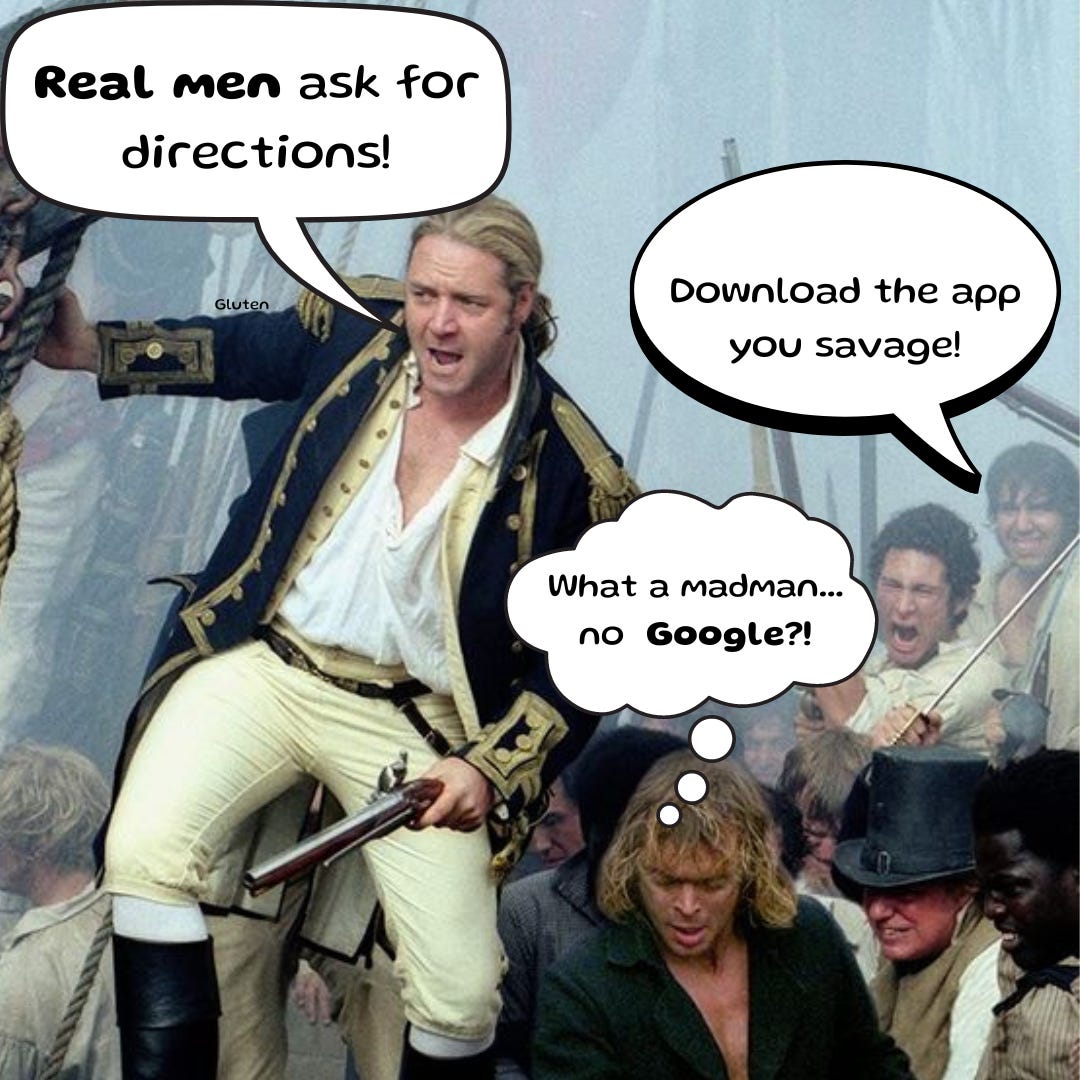
My black book is in my brain. Come and take it.
I don’t submit photos to the cloud anymore, but have them loaded on a memory chip from a real camera (yes they still exist) that only I control. I also don’t take those photos for granted anymore and appreciate each Kodak moment.
Plus, do you know how much easier it is to literally stick a chip in the computer to download your photos, rather than waiting for the internet to do it for you?
It’s literally instantaneous.
Lesson 5 - Hard bodies hard wire
When I hit the keystrokes, I type from a place of power. I stand with my knees slightly bent, and my head looking straight ahead at the monitor, rather than hunched over like Quasimodo. Years ago, I started out standing for a couple hours each day, now I can stand for 8 hours straight no problem. Not having a wireless connection also helps my nervous system not be in a chronically-stressed state when typing. Radiofrequency increases oxidative stress as our blood cells clump together, rather than flowing freely. Since blood transports oxygen to our brain, we are more likely to develop brain fog when on a wireless device.
When we’re in an upright posture, and our spine is erect, our brain can receive more blood and oxygen as a result, which lets us, dare I say…think!
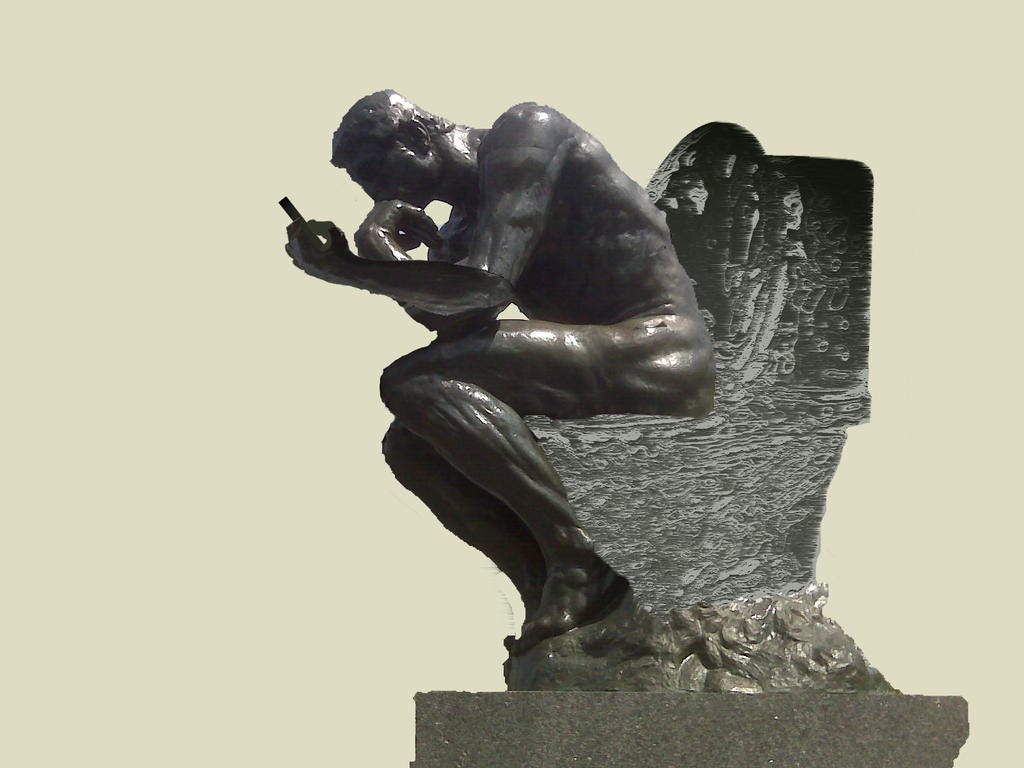
When we stand in a position of power, this signals to our brain that we are in control. Being a good leader isn’t about being reactive or aggressive, hitting the dislike button on your enemy - it’s about scrolling right past their feed while you build your own army with pen, paper, and a desktop connection.
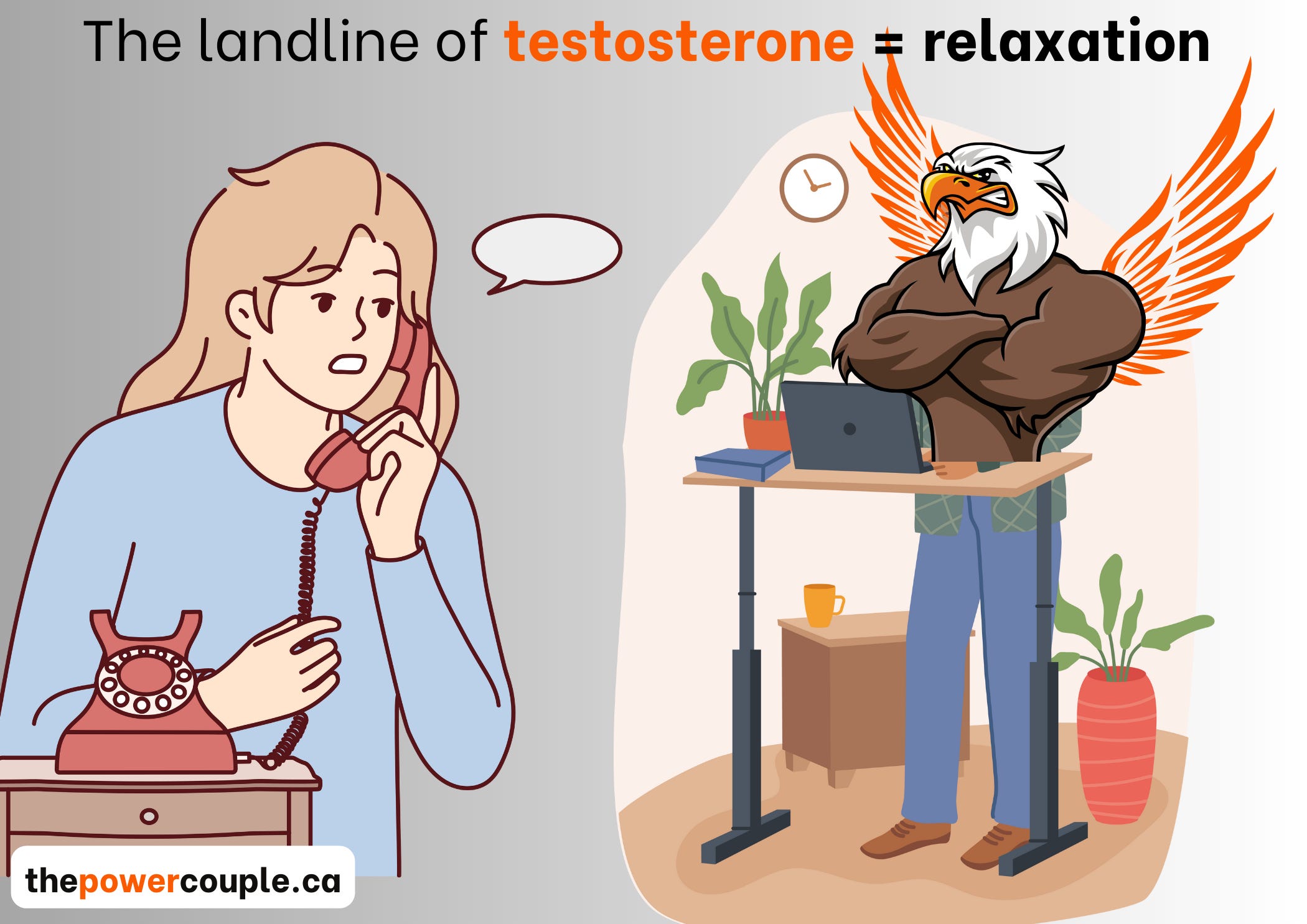
Research by social psychologist Amy Cuddy has shown1 that by “power posing” our testosterone levels increase, while reducing the stress hormone cortisol.
Many a good ole’ grandma, talking on their copper-landlines, have more testosterone than some of those meatheads in the gym scrolling into oblivion.
Lesson 6 - Less texting = More brain power
Many of us take our fingers for granted. Our hands are exquisitely linked to the rest of our brain and neural circuitry, so when we type we dampen our cognitive abilities. This is why you’ll see many musicians or artists with increased gray matter in their cerebellum, as they are activating different regions of their brain with not only their minds, but bodies as well. Brains of jazz artists were shown2 to have increased blood flow to their medial prefrontal cortex, which exerts top-down executive control in the brain.
Lesson 7 - I miss out on some things, but I get everything.
Do you remember TV shows or movies from the eighties where certain characters would just sit on a park bench like Forrest Gump and zone out? When’s the last time you noticed anyone sit on a chair or in a park and just stare into space?
I do this a few times per week whenever I’m picking Bohdanna up somewhere. It’s a skill men used to have - learning how to patiently wait for women, without a toy to distract them. Stare up at the sky men - it builds character.

Children, along with many adults, don’t know how to be bored. Instead of zoning out, they get themselves locked in the twilight cell phone zone of no return.
Like a colleague of mine recently told me – children don’t know how to live “vertically” anymore, and instead are trapped on the horizontal plane. We’ve lost touch with our sense of Divine wonder, the stars above, and have submitted to an endless wheel of AI which will only give us dooms of fortune. If we give up our mind power, we’ll only know Siri, and never appreciate Sirius.
Living vertically allows us to build the relationship we have with ourselves, and as a result lets others do the same. For instance, my friends know that if they send me an email, I’m likely not to get back to them right away. Because I’ve trained myself not to react in the twinkling of an eye, I have conditioned them to reach me through two long-forgotten modes of communication:
1. Email: I know…it’s so 1990s of me.
When responding via email, I can remain more present, composing longer, more thoughtful messages, in a safer, faster, more secure mode of communication.
2. Copper-wired landline telephone (dare I say)
With a hardwired connection, it’s easier to remain present for someone. There’s only so far I can walk or go while connected to my wall. We also have a richer experience in a true phone call. When hearing someone’s tone of voice – we’re better able to decipher their state of mind. A life-changer was letting calls go to the answering machine and calling that person back when I’m ready. Both parties benefit as a result.
I’ve also been able to maintain better relationships and conversations through eye contact, something which suffers immensely when we immerse ourselves in our cell phones. Wireless radiation has been shown to destroy our prefrontal cortex, along with areas of the brain responsible for empathic connection like the insula, which is responsible for processing emotional cues.
🤳 Bonus Lesson: Selfies don’t have a share button.
Embarrassing selfies with Kardashian fishlips are less easily shared on the web:

Love you all!
Your support is more powerful than you know.

If you’ve found this article valuable, would you consider sharing it?
*Paid subscribers get 10% off select services, including our EMF 101 course!
EMF 101 has launched version 3.0
How can we measure EMFs in our environment?
How can the wiring in our homes lead to cancer?
What can we do to minimize 5G?
What are some other ways we can nourish the electric field of our body?
We’ll be covering these types of specifics, along with practical steps we can take to reduce EMFs in our daily lives during EMF 101.
Our course has launched already, but you can join the waitlist for the next round of classes!
Additional Resources:
https://www.amycuddy.com/
file:///C:/Users/info/Downloads/pone.0001679.pdf
Thanks for this timely post Roman. I'll explain why the next time we talk.
Although I own a cell phone (actually two), I barely use it. And it always travels powered off in a faraday bag.
After being the victim of a "SWAT" attack, I will no longer have a hardwired home phone. (never use phones anyway)