

The Swiss Sun Doctor
Circadian Hospitals | Mountain Heliotherapy

“Love of the unseen vanquishes fear of the unknown.”
~Anonymous
In ancient days of lore, viking ships and caravels plundered distant lands with a lust for exploration and exploitation. Today skippers of satellites drift in space, mining asteroids, while seeking the elusive elixir of eternal life through robots who can only give more time - never create it. Distant galaxies may shine with the promise of rebirth, but what if the sun has already given us the ultimate gift? While some may think the void has endless real estate, the boundaries of the soul have always been about light - our infinite location, location, location.
Astronauts may run from gravity in an effort to cast off their earthly shackles, all the while soaring toward our star. Whether we like it or not, we all live and die under the same sun. Some of us may try to hide under umbrellas and sunglasses, while others learn to live with the brilliance of each day. The ancients did not know quantum physics, yet they were able to harness the photons of the solar system with ease.
Our ancestors had once made buildings to support life. Today we’re on life support. Shelters have devolved from their humble throne, into a prison of comfort that once was a palace of rest. We’ve built houses of lust, instead of homes we can trust. We shutter our blinds from the outdoors, replacing fire with a laser-lit night where our moods turn as blue as the screen. We scroll like a troll, afraid of the responsibility the dawn will bring. We lay confused in bed, stir crazy with thoughts that sap our zest for life. There is a better way, but we’ll have to go back in time, and through the Sol fire to find it.
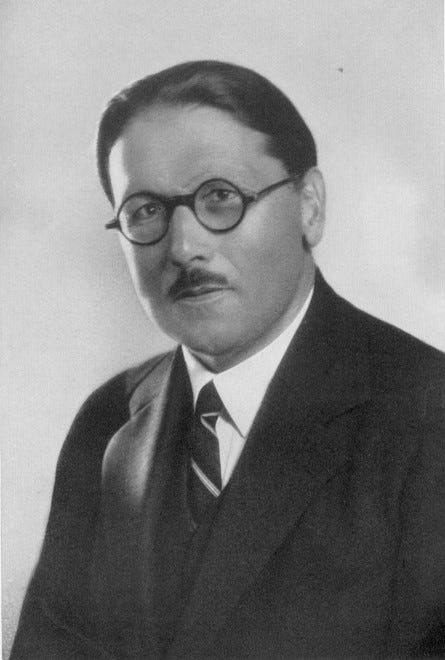
In the early 1900s an orphan boy suffering from a severe form of tuberculosis, on the verge of death, arrived at the village of Leysin, Switzerland to seek the help of a local physician. Dr. August Rollier was not a typical doctor. Rollier was an advocate of heliotherapy as a remedy for tuberculosis, and began to use sunlight on his patients at his clinic in 1903. Although the Egyptians, Greeks and many other ancient cultures practiced heliotherapy, Dr. Rollier helped renew the practice in the twentieth century. His methods included gradual tanning in cool conditions, combined with rest, fresh air, nourishment and exercise.
Tuberculosis was a common disease in the 19th century, however surgery was often unsuccessful. During his time studying under Theodor Kocher, a pre-eminent European surgeon, Rollier became deeply disillusioned with the poor results obtained in the treatment of skeletal tuberculosis. Two occurrences led him to abandon a promising career in surgery and take up general practice. First, a close friend of Rollier’s contracted tuberculosis while they were at school together, having his hip and knee joint excised by Kocher, during the time when Rollier was Kocher’s assistant. Unfortunately, these operations did not cure the patient and his death left a deep impression on the young doctor. At the same time, Rollier’s fiancee became seriously ill with pulmonary tuberculosis. In the hope that the high mountain air would prolong her life (which it did), Rollier decided to move into a rural general practice at Leysin, in the Alpes.
Let us turn our attention back to the case of the sickly orphan boy who sought help from the Swiss sun doctor. What were the results of Rollier’s method of treatment? We can let the pictures speak for themselves. On the left is an image of the boy upon his arrival at 4.5 years old. In the middle is a picture of the boy after six months of heliotherapy. His overall demeanor, muscle mass, and bone structure had greatly improved. On the right is a picture of the same boy skiing in the Alps, completely recovered after 2.5 years of therapy:
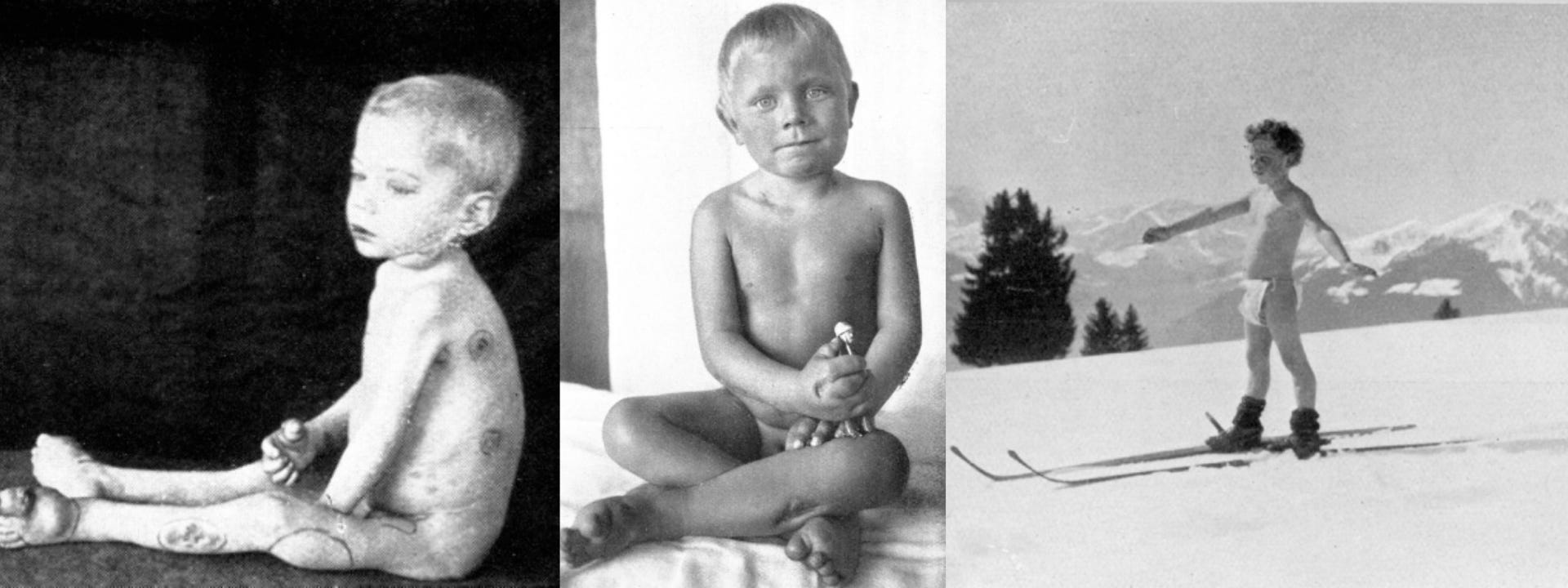
Over the next forty years the technique Rollier would devise was a method for irradiating the body with sunlight, which came to be generally regarded as the best way to conduct heliotherapy. In 1930, there were 3,000 patients being seen at one of Dr. Rollier’s clinics in Leysin, Switzerland. School, work, healing and leisure activities were all done in the sun.
Around the same time, American doctors primarily focused on tuberculosis found benefits in the arid, sun-drenched southwest. Physicians across Europe promoted heliotherapy as a cure for tuberculosis and lupus, cuts and scrapes, burns, arthritis, rheumatism, and nerve damage. During World War I, the German Army opened sun-hospitals for its soldiers. Tans after the War started to become trendy.
Notice how tanned these fair-skinned people are:


Less than fifty years later, at the end of World War II, the first ad for Coppertone sunblock showed up on billboards across the US. Bayer owned Coppertone and was one of the companies that merged to form IG Farben in 1925, who would go on to create nerve gas for the Nazis. After World War II, IG Farben was dismantled, and Bayer became an independent company again. Conventional solar medicine had been replaced with chemical warfare, as Nazi scientists were warmly accepted into the ranks of the US military-industrial complex in the 1940s. Bayer would go on to acquire Monsanto in 2018, and continue the mass poisoning of farmland with pesticides. They have yet to crush the seed of the human spirit, which Rollier had planted over one hundred years ago. Let us shine some light and cultivate what the Swiss Sun Doctor germinated before, shall we?
Rollier’s technique
Patients were exposed to the sun very gradually, and increased their time outside by only a few minutes each day. A series of short sunbaths three or four times a day produced better results than prolonged exposure. This was especially true of patients with pulmonary tuberculosis or tuberculosis of other internal organs.1
[Source] Sunlight & Solar Architecture, R.A. Hobday:
“Rollier felt that the benefits of early-morning exposure to the sun were of particular importance, and he recommended that in the summer months the treatment should be given between 6 a.m. and 9 a.m. - and at lower altitudes even earlier still - if the best results were to be achieved. The “heat” of the sun was avoided except where sunlight was used for the disinfection of wounds. Gradual exposure to cold air was important because it raised and maintained high metabolic activity in patients. This, in turn, was considered to improve their general health and to enable them to resist and overcome infection. Cool conditions and low winter and summer sun also reduced the risk of over-exposure to the sun’s rays. Rollier regarded exposure to the sun at temperatures greater than 18°C / 64°F to be a “hot-air bath” and not a sun-bath. As he put it:
‘A very current mistake consists in thinking that the sun bath is all the more efficacious if prolonged or taken when the sun is at its hottest; this is an inconsistency against which Nature herself seems to warn us.’ 2
~ Dr. Auguste Rollier
Heliotherapy in Rollier’s clinic began with the feet, and continued with the legs and arms, before exposing the abdomen and chest. By adopting this approach the tolerance of a patient to sunlight could be determined before the more sensitive parts of the body were uncovered. Also, if the patient received too much sunlight, only the extremities were involved and any adverse effects would be local rather than general. Rollier considered his method to be safe because it caused blood to flow away from the internal organs to the limbs, which he termed the “neutral” parts of the body.
Dr. Rollier also successfully treated rickets, war wounds, burns, varicose ulcers, bacterial bone infections, septic abscesses and fractures.3 Rollier practiced sunlight therapy at Leysin for over forty years and had thirty-six clinics with a total of more than 1,000 beds. Each of his clinics was arranged to allow prolonged exposure to sunlight and each was similar in design, which we will explore below.
Rollier’s clinics
Opening in 1903, a converted boarding house, Le Chalet, was Rollier’s first clinic devoted exclusively to the systematic treatment of surgical tuberculosis. Large south-facing balconies were added to the first floor so that patients’ beds could be wheeled out into the sun. Its south-easterly orientation meant that sunbathing could start at sunrise during the summer months, but also that its main balconies were out of the sun during the latter part of the afternoon.
In 1909, Rollier converted Les Chamois, an Alpine tourist hotel, for heliotherapy. Its south-easterly orientation meant that sunbathing could start at sunrise during the summer months, and like Le Chalet, its main balconies were out of the sun during the latter part of the afternoon.


Built in 1911, Les Frênes was probably the first large purpose-built heliotherapy clinic to be constructed in Europe. It consisted of a central, south-facing block and two large wings. The left wing faced south-east and its upper floors had large uncovered terraces which could be used for sun treatment all year round. The terraces offered little protection from the wind and summer sunshine, so they were used by patients who were well-used to sun treatment, or who were not seriously afflicted by tuberculosis. The right wing of Les Frênes faced south-west. Four of its five floors were occupied by patients. The solarium was also used as a play area and by patients who were making their first attempts at walking and needed an absolutely flat surface. Solaria roofs of this type were a feature of all Rollier’s clinics.
Don’t throw germs in a glass house
In the mid-1920s, a physiologist, a glass technologist, and a zoo embarked on an exciting new venture which promised to turn buildings into therapeutic devices. Their project was to devise an architectural glass which would admit the beneficial, therapeutic ultraviolet spectrum of sunlight into the building. They called their invention ‘Vitaglass’, a material that allowed the invisible ultraviolet radiation of the sun to enter a building. British surgeon and heliotherapist Henry Gauvain applied this glass in a new hospital he had helped plan and build called Treloar. He was knighted in 1920 for helping to construct this ground-breaking building.


The hospital wards of Treloar were designed with high ceilings so that the cross-ventilation system would provide a supply of gently moving air, without draughts. It was felt that dormitory and ward infections would then have less chance of developing. Radiant panels in the walls of the wards supplied heating which was intended to keep out the damp and keep the feet of patients warm and their heads cool. In addition, each ward was provided with an open fireplace: the psychological effect of a radiant heat source was felt to be considerable, especially on dull and dreary winter days. Can you imagine a hospital with a roaring fireplace today?!
The sun shines on architecture
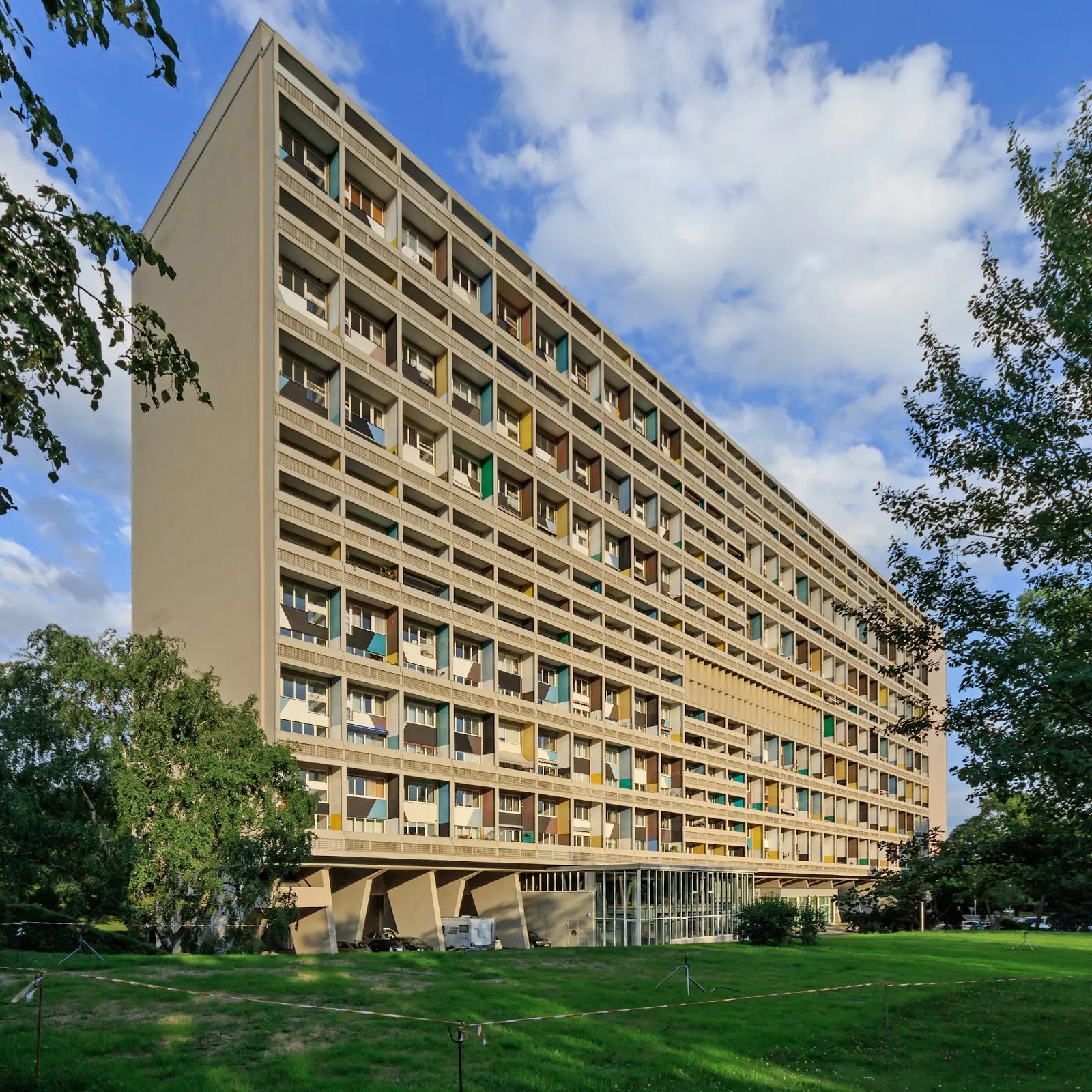
The sun doctors would spark modern solar architects to not only build shelters, but create sanctuaries where humans could thrive. Born in 1887 in La Chaux-de-Fonds, Switzerland, Charles-Édouard Jeanneret, better known by his adopted name Le Corbusier is one of the most influential and revolutionary architects of the twentieth century. He had a preoccupation with sunlight and this was due, in part, to a concern about the dangers of tuberculosis. This concern reveals itself in the book he wrote on one of his most important buildings, the “Marseille Block”:
“Doling out cosmic energy, the sun’s effects are both physical and moral, and they have been too much neglected in recent times. The results of that neglect can be seen in cemetery and sanatorium.”4
~ Le Corbusier
A large apartment building of eighteen floors, the Block shared many of the features of a heliotherapy clinic. It was meticulously orientated for sunlight: balconies served as sun-screens and were designed to allow sunshine into the apartments in winter while providing shade in the summer months. They also provided an “open-air extension” of each living room. In addition, the Marseille Block had a terraced roof which provided a range of amenities for the residents, including a solarium.
Our Sol responsibility
Energy-efficiency. Sustainability. Social responsibility. All have become buzzwords when it comes to how we think about buildings. Architects have been focusing on lowering energy loads for buildings’ lighting, ventilation, heating, and cooling for a very long time. With the advent of structural embodied energy (the total energy needed to produce goods or services across a product’s life cycle, “built into” the material) solar design has expanded to include concepts of light and passive techniques. Here’s the rub: buildings that stand the test of time, and are truly energy-efficient in the long run take more energy to construct than they do to operate. Take this 2,500 year old Persian refrigerator in the desert for example, known as the yakchal:

It takes lots of manpower and material to build, but lasts forever. Not only is there zero EMF, you don’t have to worry if the power company is going to shut off your ability to have an ice sandwich after a long camel ride. We dive deep into other examples, and the physics of these buildings here:
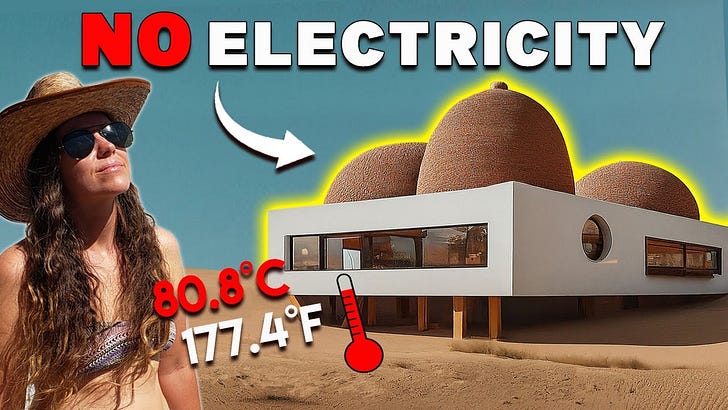
Passive solar architecture is an old technology, but can be a new frontier. While solar panels can help offset energy costs, many inverters contribute to biological devastation due to the carcinogenic electromagnetic interference generated by high-frequency models. Low-frequency inverters that are off-grid and filtered for dirty electricity can be a solution. However, we can also take a tip from our ancestors, who used nature instead of working against her.
Sand castles in the sky
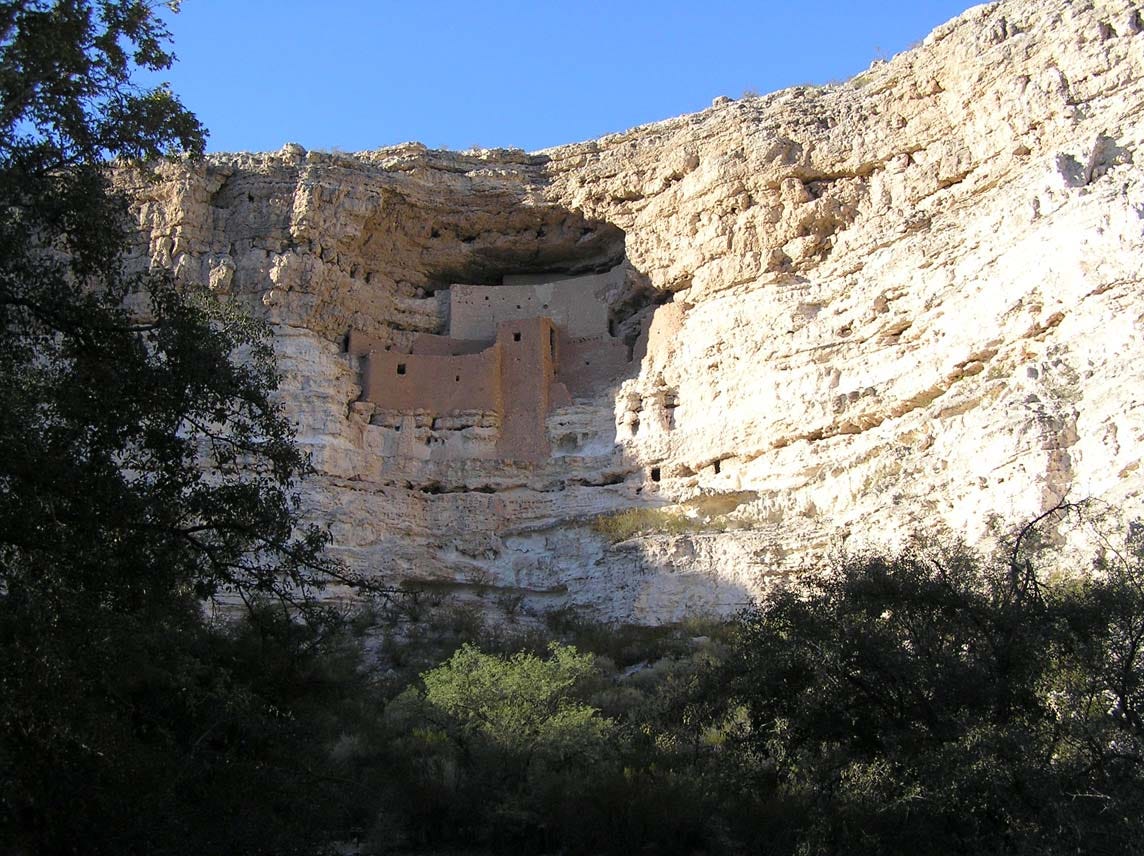
On our trip through Northern Arizona last year, one of the stops Bohdanna and I had mapped out was at Montezuma’s Castle. Located in Camp Verde, this 20-room, 5-story cliff dwelling was built by the indigenous Sinagua people around 1100 AD and remained occupied until about 1425 AD. Today it endures as a testament to the ingenuity, skill and mystery of the pre-Columbian cultures that once thrived across the American Southwest. Its southern exposure was intentionally chosen by the Sinagua so the structure would absorb warmth during cold winter days while remaining cool in the summer. However one cannot doubt that the Sinagua got a fair amount of sungazing done on those majestic mornings, revitalizing their spirit and body for the day ahead.
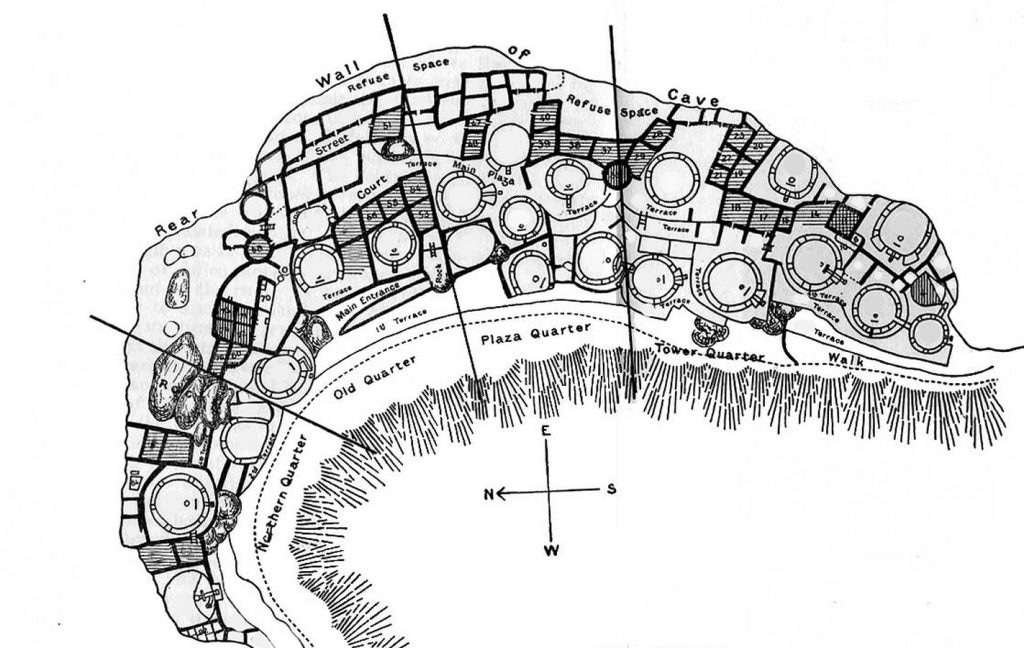
The Mesa Verde Cliff dwellings, the largest cliff home of its kind in North America, is another example of how we used to build with the sun. Renowned for its numerous, well-preserved cliff homes carved out of tiny caves and residences erected along canyon walls in Southwest Colorado, its massive overhanging cliff protects the settlement from extreme sun and the elements. For practical and religious reasons, they also constructed buildings in strategic locations to serve as solar indicators during specific times of the year, including the solstices. Notice how the dwelling was constructed with the southeast orientation in mind, like the heliotherapy clinics of Rollier:
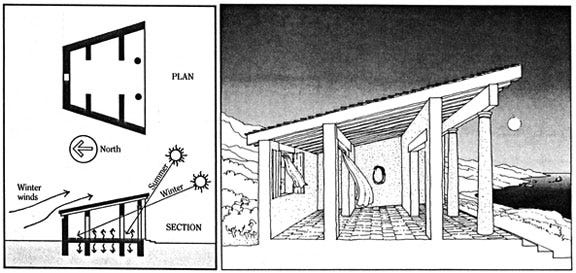
The Socrates House
What is the ideal house shape that stays warm in winter and cool in summer, without reliance on outside energy sources? Socrates, the Greek philosopher, studied this problem about 2,500 years ago. His solution – Socrates House as it’s now referred to — is a trapezoid shaped house with the long side facing the sun. Its design embodies the majority of passive solar principles, and has substantial stone walls to keep chilly winter winds out of the living areas and away from the northern part of the house.
The southernmost part of the home is where the patio is located (where manly Greek philosophers would sungaze, meditate and grill lamb while slathering themselves in sun oil), which helps warm the indoor environment during the colder months by allowing oblique winter solar radiation to enter the structure. It also prevents the living space from growing hot in the summer by blocking the high-inclined summer radiation from the sun. The storage room, which serves as the house’s service space, is located on the northern side of the building and shields the living area from the outside cold:
The Keck House
George Fred Keck’s 1939 Sloan House in Glenview Illinois, was one of the first North American homes built with careful attention to its solar dynamics. The house has a long, narrow plan which gives all of the living areas – including bedrooms, living rooms, kitchen and study – a full south-facing exposure. The south façade is largely glass, with panels alternating between insulated Thermopane units and operable, single paned glass windows. Keck worked with experts at Chicago’s Adler Planetarium for three months to track the seasonal and diurnal path of the sun, so as to precisely extend the eave of the roof to block sunlight in the summer and let it in during the winter.5 Again notice the south façade:


UK hospital opens outdoor care ward
In May of 2026, King’s College Hospital became the first modernized hospital in the UK to open an outdoor Critical Care garden on its roof. The King’s Critical Care Roof Garden is located on top of the hospital’s 60-bed critical care unit, allowing patients to receive full life support, while absorbing the medicine of the outdoors. The roof garden has space for up to six beds, allowing each patient to be close to a specially designed weatherproof medical cabinet which houses power, data, and medical supplies similar to what patients would receive indoors.
Here’s a video of Hollie Allan, 29, a patient being transferred in a lift, out of intensive care for the first time in two months, and into the garden:
“ ‘Brace yourself for the cold!’ say the nurses crowded into the lift around Holly’s bed. As the doors open, sunshine hits Hollie’s face.
She brightens into a smile, then tears come. “I’m sorry, it’s so nice. It’s so beautiful,” she says wiping her eyes. ‘I forgot what it feels like to be outside.’ ”
More healthcare operations are beginning to see the benefit of a natural light environment, not only for overall well-being, but for their profit margins. A 2025 study6 in the Journal Healthcare revealed that patients who have circadian-friendly lighting installed in their rooms are about 50% less likely to experience falls, which lead to injuries and longer hospital stays. In Scandinavia, at least 130 hospitals have installed circadian lighting. I also recently visited an assisted living facility called The Landings in Prescott Valley, Arizona who has installed circadian lighting in their memory care ward. (More to come soon on that visit.)
Operating rooms are also adopting a mix of green lighting to reduce glare and afterimage effects. Surgeons often spend prolonged periods focusing on red tissue and bright white surgical lighting. This can degrade their vision when shifting focus.
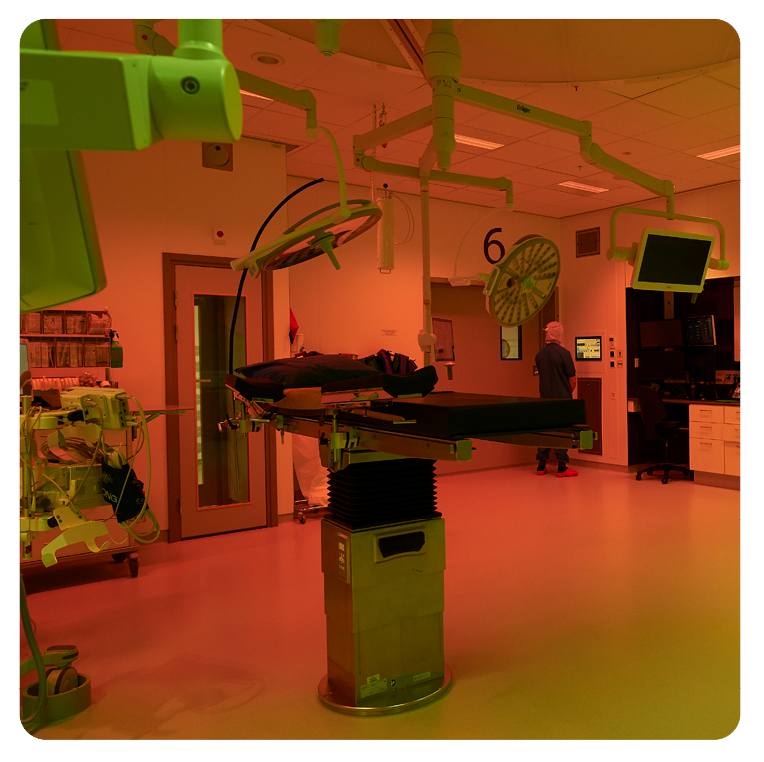
Here are some more benefits of green and red light in a healthcare setting:
🟢 Green light:
Reduces anxiety and improves patient comfort before and after surgery.
Lowers pain and improves sleep quality, which may contribute to quicker postoperative recovery.
Minimizes glare from blood and tissues: Green light reduces glare when working with highly reflective surfaces, such as surgical instruments.
Reduces eye fatigue: Since the human eye is most sensitive to green light, it provides an optimal balance for maintaining long-term concentration in high-stress surgical environments.
🔴 Red light:
Preserves night vision: Red light allows for sufficient visibility without impairing the ability to see in low-light conditions, which is particularly useful during laparoscopic or robotic-assisted surgeries.
Minimizes disruptions to circadian rhythms: Red light exposure has a lesser impact on melatonin suppression compared to blue or white light, making it an ideal choice for late-night or emergency surgeries.
Reduces postoperative disorientation: Exposure to red light instead of harsh white light after surgery helps patients transition more comfortably from anesthesia to wakefulness.
Minimizes stress and discomfort: A red-light-enriched recovery environment has been associated with lower heart rates and increased relaxation.
In Rollier’s time, it was often difficult to distinguish between open-air sanatoria for tuberculosis, and heliotherapy clinics, as both were oriented for sunlight: but for different reasons. Open-air sanatoria were designed to admit sunlight in an attempt to kill bacteria and prevent the cross-infection of patients. Although sanatoria were designed to be sunlit, heliotherapy wasn’t yet being considered as an effective treatment. Photos of open-air sanatoria often show patients covered by bedclothes on balconies or verandas, however there is no evidence of any attempt to expose their bodies to direct sunlight.
Mainstream medicine’s adaptation of natural light may be positive, however a radical shift is needed to completely decentralize health. Circadian-lighting in the form of LEDs still introduces carcinogenic dirty electricity and degrades electronics without the proper filtration. Green and red wavelengths are an improvement from fluorescents to be sure. However the white light of the sun does not pick and choose which frequency, personality, or race it likes or dislikes - it possesses all wavelengths. Into this all-forgiving galaxy may we unfold our hearts, as our love rushes past the void of fear, at light speed for all the year.

👉 If your life has been positively impacted by our work, would you please leave us an online review here?
Additional Resources:

What Roman used to listen to when doing his high school homework:
Check out The Power Couple Bookshop - dedicated to helping us relearn from our ancestors!

Support us the old fashioned way!
Send us an email to info@thepowercouple.ca if you’d like to send us other forms of payment, including 🐌 mail.
Auguste Rollier, Heliotherapy: with special consideration of surgical tuberculosis, 1st ed., Frowde and Hodder & Stoughton, 1923,
Hobday RA. Sunlight therapy and solar architecture. Medical History. 1997;41(4):455-472. doi:10.1017/S0025727300063043
Rollier, op. cit., note footnote 1 above, pp. 258-85
Le Corbusier, The Marseille block, transl. industrielle, G Sainsbury, London, Harville Press, 1953, p. 21.
https://energyhistory.yale.edu/george-fred-keck-keck-and-keck-architects-sloan-house-glenview-illinois-1939-gallery/
Okinami T, Suzuki T, Nishikawa N, Negoro H. Circadian Lighting Was Associated with a Reduction in the Number of Hospitalized Patients Experiencing Falls: A Retrospective Observational Study. Healthcare (Basel). 2025 Jul 14;13(14):1692. doi: 10.3390/healthcare13141692. PMID: 40724717; PMCID: PMC12294480.
Truly enjoyed this article! Saving, sharing!
Why would anyone think it’s a good idea to dim the sun?
Might be hard for Arizonans to experience the sun in cool hours.
Since recently learning that the sun is GOOD for my eye's macular degeneration condition, I go outside every morning for a few minutes and look at the clouds around the sun.
I call it my sun therapy.
I also walk around my community for about 20 minutes just before sundown, exposing my eyes to the sunlight.
I recently stopped wearing sunglasses when outside for a little while.