


Here’s what we’ll learn in this article:
1. How do our bodies use Vitamin D to heal our skin?
2. How can we absorb more UV without getting a sunburn?
3. Can cell phones and screens cause dermatitis?
4. How does dermatitis present on those who play video games?
5. How was screen dermatitis discovered in the 1970s?
“Keep your face always toward the sunshine - and shadows will fall behind you.”
-Walt Whitman
Have you ever been diagnosed with eczema or rosacea?
What if we told you that rash on your face means that you may need to reverse your prescription of staying indoors hiding from elements, and run toward the Sun instead?
How do we heal our skin with sunlight?
The building blocks of life are proteins.
Proteins are made of amino acids. Amino acids are made up of peptides.
Why is this important for our skin?
The active form of vitamin D (1,25-Dihydroxyvitamin D3), not the storage version (D25 OH), regulates how we express the antimicrobial peptide cathelicidin, not only in our white blood cells but also in our epidermis, the outermost layer of our skin.
Cathelicidin (LL-37) has been studied for its role in wound healing1 and skin diseases as diverse as psoriasis, rosacea, and dermatitis.2 When LL-37 increases, so does protease activity. Proteases are involved in numerous biological pathways, including digestion of ingested proteins, breakdown of old proteins and cell signaling. This is why vitamin D is more of a hormone than a vitamin. Hour-mones tell our bodies what to do, and when to do it. Our bodies make it, which means we don’t have to take it.
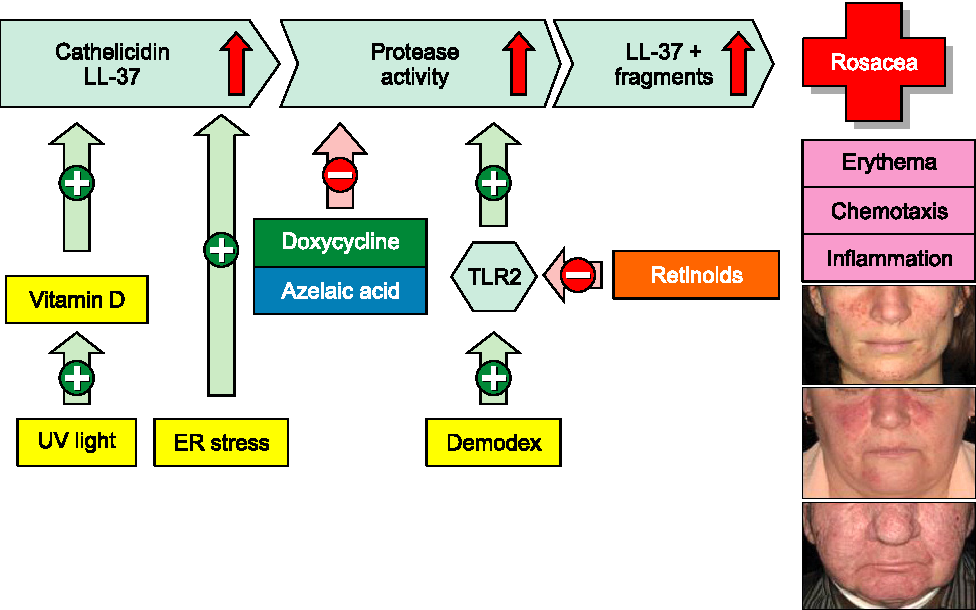
The optimal way for our bodies to make the active form of vitamin D is through Sun exposure. For instance, we can create up to 20,000 IU of vitamin D in the summer at the latitude of New York just by being outside for twenty minutes.3 However when we take supplements, this can send a false signal to our tissues that the amount of vitamin D is plentiful, leading to a cascade of health harm.
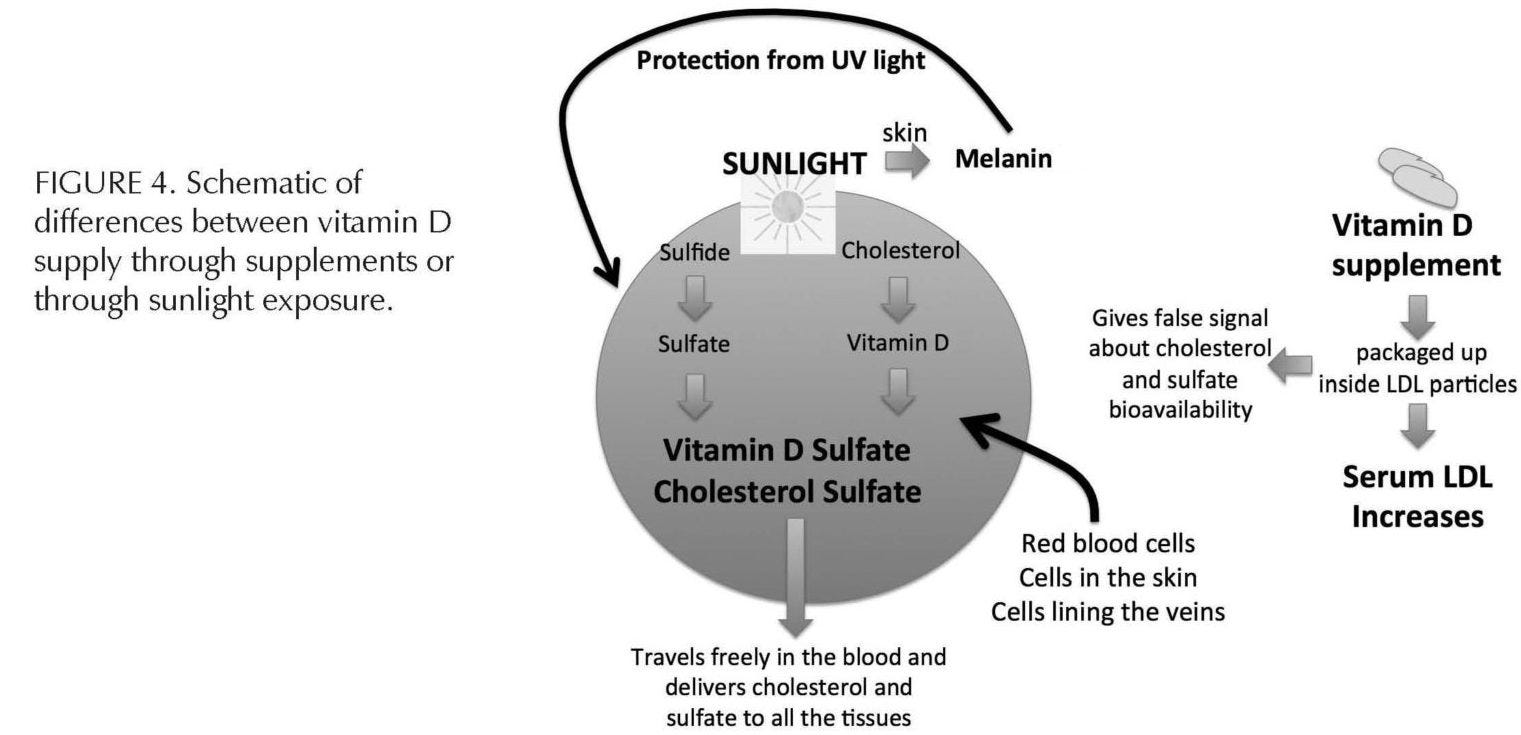
Vitamin D is made from LDL cholesterol when we expose ourselves to UV-B light.
How can we absorb more UV-B without getting a sunburn?
We load our skin with up with red light in the morning, so that we can then absorb more UV later in the day. Now that you know how Sunlight can create healthy skin*, we’re now going to tell you what not to do if you don’t want to look like a sick, pale blue demon.
*Each of us has individual needs when it comes to our skin health, so a gradual, holistic approach of precision-timed sun exposure should be applied.
The good news is that we can rip the band aid off right away when it comes to catapulting our healing journey.
What’s the bloody bandage we need to dispose of? Our phones.@
Can cell phones and monitors cause dermatitis?
Olle Johansson, associate professor and head of the Experimental Dermatology Unit, Department of Neuroscience, at the Karolinska Institute (famous for its Nobel Prize in Physiology or Medicine) in Stockholm, Sweden, is a world-leading authority in the field of EMF radiation and health effects. We interviewed Dr. Johansson recently on our podcast, where we discussed how he discovered the screen dermatitis phenomenon, along with the EMF impact on colony collapse:

Johansson has published more than 300 original articles, reviews, book chapters and conference reports within the field of basic and applied neuroscience.4
In one of several related studies2, Johansson found a profound increase in mast cells in facial skin samples from people whose skin had become toxified with wireless radiation. Mast cells regulate our immune response and play a key role in the inflammatory process. For example, when mast cells detect a substance that triggers an allergic reaction (e.g. pollen) or electromagnetic poisoning (e.g. Wi-Fi or blue light), they release histamine and other chemicals into the bloodstream. Histamine makes our blood vessels expand and the surrounding skin itchy and swollen.
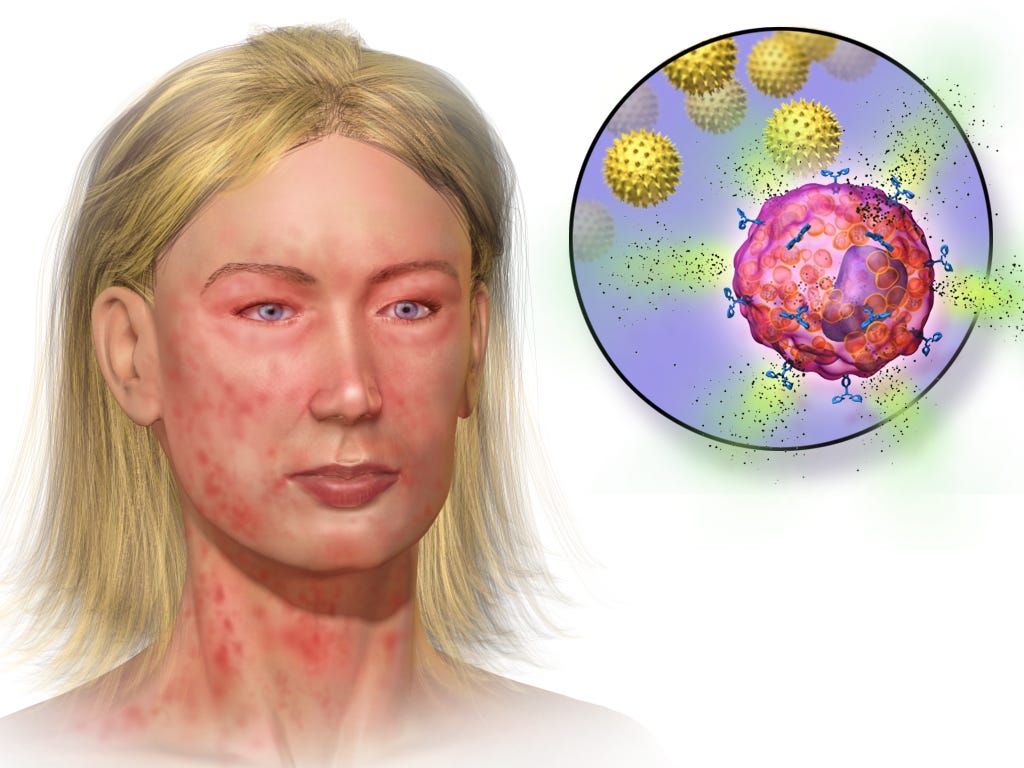
“For me, it was immediately clear that persons claiming skin reactions after having been exposed to computer screens very well could be reacting in a highly specific way - especially if the provocative agent was radiation.”
~ Olle Johansson
Histamine causes many food allergies or sensitivities because it’s released when our environment is filled with wireless radiation. This is due to alterations of the calcium control mechanisms5 that work normally with light. If we expose ourselves to excessive amounts of wireless radiation, our mitochondria can’t use calcium efficiently, and creates disruption in how the cells of our immune system communicate.6
This light-calcium connection extends to Vitamin D as well, as D signals and metabolism are crucial helping us regulate calcium. For instance, vitamin D controls autophagy (destruction of unusable cells) through multiple pathways, including triggering intracellular calcium release.
Like UV, which is absorbed by hisditine and our anti-inflammatory melanin molecule that allows for cell repair, shorter wavelengths of radiofrequency (RF) radiation also interact moreso on the surface of our skin. You’ll notice in the diagram below that the absorption of melanin increases as the wavelength of light decreases (e.g., UV has a shorter wavelength than infrared):

Similarly, radiofrequency (RF) rides along the surface of the electrical wiring in our home, also known in engineering as the skin effect. When applied to the human body, RF creates a layer of electrosmoggy Sunblock around us, that clogs our pores with radiation, not allowing the Sun to detoxify and repair our skin.
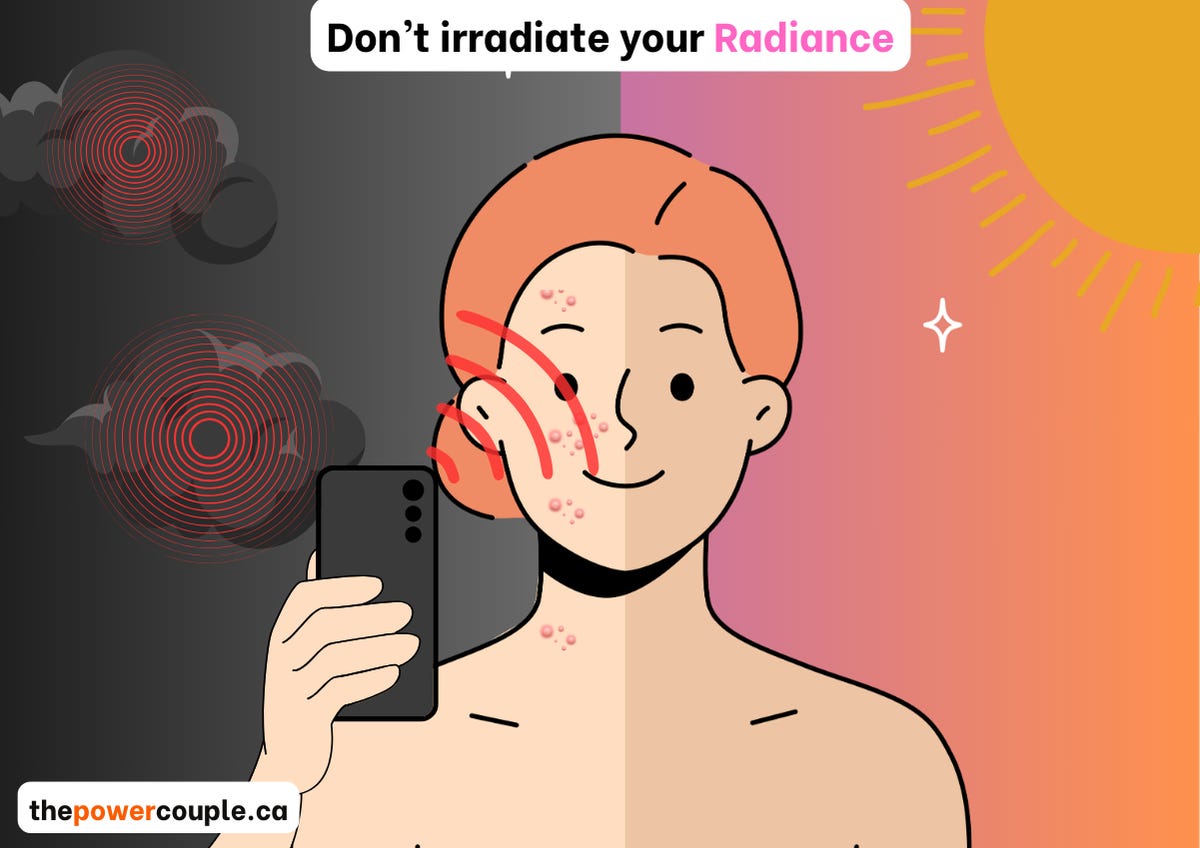
”People often forget that Sunlight is a natural calcium channel blocker and this acts to control the release of histamine in many tissues exposed to sunlight. EMF is tied to food sensitivities, gut symptoms, and bacterial/yeast production of histamine to great excess. Most people do not realize how these things connect to modern illness like eczema, allergy, and food intolerances. Eliminating the food is not a wise decision but mitigating our [electrical] environment is the key move.”
Video gamers got no game
In 2021, the International Journal of Pediatrics & Adolescent Medicine published a study3 that advised dermatologists to “consider video games with a high index of suspicion when encountering [skin disease] in underage patients engaging in persistent gaming behavior.”
“As video games become increasingly advanced and immersive, various cutaneous conditions arising from intensive gaming will likely become common over time.”
~ Georgia Kyriakou, Department of Dermatology, University General Hospital of Patras
When we expose our skin to screens, it responds by creating more melanin. Melanin is a miracle pigment molecule that fights cancer by absorbing UV (ultraviolet) radiation, and turning it into heat our bodies can use.
Like cholesterol, melanin fights inflammation. When we create too much, a condition known as hyperpigmentation arises. Hyperpigmentation is also caused when we’re deficient in B12, which is not only a vitamin, but a photoreceptor that is depleted by blue light.7
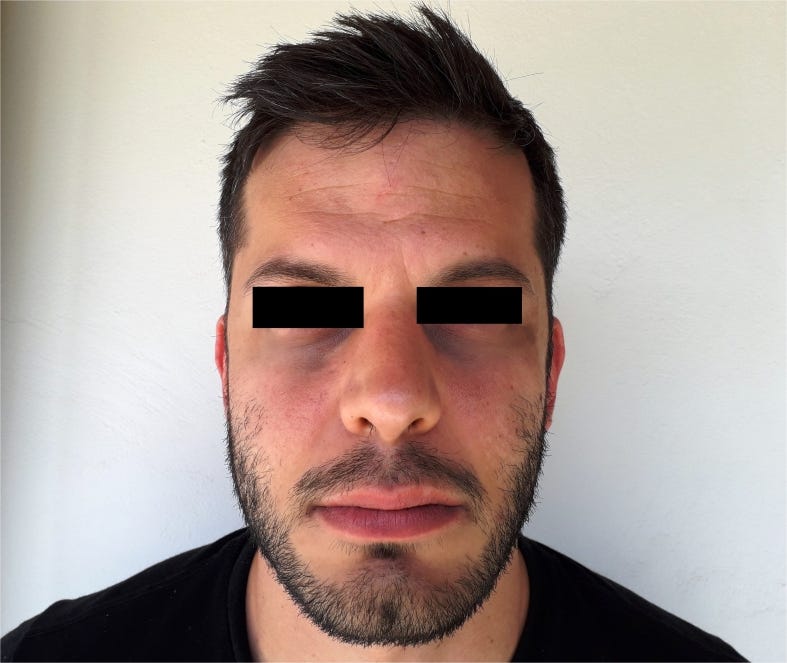
If you’re trying to attract the opposite sex, you may want to ditch the video games, and start playing The Game of Life, which is won when greet the sun each day.
Full disclosure: I used to play a lot of video games as an 80s child, and would hold the Duck Hunt gun right up to the TV. Then again, who didn’t who played that game?
POLL
The origins of “screen dermatitis”:
An excerpt from Arthur Firstenberg:
In the 1970s the newspaper industry was one of the first to supply its employees with computers. Complaints of visual problems and headaches, as well as clusters of miscarriages and birth defects in children born to female editors and other newspaper employees, generated some publicity.
In the United States, then-Representative Al Gore held Congressional hearings in 1981 on the health effects of computer screens. In Sweden, a union activist brought the problem to the attention of Dr. Olle Johansson, a neuroscientist at the world-renowned Karolinska Institute. Johansson was the head of the Experimental Dermatology Unit at the Institute.
“For me,” said Johansson, “it was immediately clear that persons claiming skin reactions after having been exposed to computer screens very well could be reacting in a highly specific way and with a completely correct avoidance reaction, especially if the provocative agent was radiation and/or chemical emissions — just as you would do if you had been exposed to e.g. sun rays, X-rays, radioactivity or chemical odours.”
Johansson began to study the skin of these patients, and proved that they had a real skin condition that was provoked by sitting in front of a computer screen. The damage was similar to that caused by ultraviolet radiation from the sun. He also showed that the radiation from computers causes measurable changes even in the skin of “normal” people, and also in the skin of laboratory animals.
The best way to support our work is with a premium subscription.
(just $5 per month).
He named the new disease “screen dermatitis.” However, since such individuals also usually complained of other symptoms, such as chest pain, memory loss, fatigue, insomnia, dizziness, nausea, and headache, the more general term “electromagnetic hypersensitivity” came into use.
Many people who worked in the electronics industry in Sweden, including an estimated 12% of the electrical engineers in that industry, became electrically sensitive, and helped form an organization called Föreningen för el-och bildskärmsskadade (Association for the Electrosensitive), or FEB. Due in part to the work of FEB and the research of Dr. Johansson, electrosensitivity is a fully recognized disability in Sweden.
More recently, Johansson and his colleagues have conducted important epidemiological studies showing that wireless communication networks are causing significant illness throughout society. They have also shown that increased rates of asthma as well as certain types of cancer were strongly correlated with exposure to radio broadcasting during the twentieth century.
Johansson warns:
“The world may be moving inexorably toward one of those tragic moments that will lead historians to ask: Why did they not act in time?”
We are more powerful than we know,

If you found this episode valuable, would consider sharing it?
Check out The Power Couple Bookshop - dedicated to making us relearn from our ancestors!

Support us the old fashioned way!
Send us an email to info@thepowercouple.ca if you’d like to send us other forms of payment, including 🐌 mail!
Since Canada Post is currently on a strike, we may need the Pony express. 🐎
Wang G, Chen Z, Tian P, Han Q, Zhang J, Zhang AM, Song Y. Wound healing mechanism of antimicrobial peptide cathelicidin-DM. Front Bioeng Biotechnol. 2022 Nov 7;10:977159. doi: 10.3389/fbioe.2022.977159. PMID: 36425652; PMCID: PMC9681526.
Reinholz, M., Ruzicka, T., & Schauber, J. (2012). Cathelicidin LL-37: An Antimicrobial Peptide with a Role in Inflammatory Skin Disease. Annals of Dermatology, 24, 126 - 135.
Pall ML. Electromagnetic fields act via activation of voltage-gated calcium channels to produce beneficial or adverse effects. J Cell Mol Med. 2013 Aug;17(8):958-65. doi: 10.1111/jcmm.12088. Epub 2013 Jun 26. PMID: 23802593; PMCID: PMC3780531.
Romero-Garcia, S., & Romero-Garcia, S. (2019). Mitochondrial calcium: Transport and modulation of cellular processes in homeostasis and cancer (Review). International Journal of Oncology, 54, 1155-1167. https://doi.org/10.3892/ijo.2019.4696
Kyriakou G, Glentis A. Skin in the game: Video-game-related cutaneous pathologies in adolescents. Int J Pediatr Adolesc Med. 2021 Jun;8(2):68-75. doi: 10.1016/j.ijpam.2019.09.002. Epub 2019 Sep 6. PMID: 34084875; PMCID: PMC8144863.
Mori K, Ando I, Kukita A. Generalized hyperpigmentation of the skin due to vitamin B12 deficiency. J Dermatol. 2001 May;28(5):282-5. doi: 10.1111/j.1346-8138.2001.tb00134.x. PMID: 11436369.
thanks for this important post.
canada post is still on strike? wow, meaning really no mail at all?
i mean the mail pickup & delivery has become pretty spotty on my rural road but at least it's still happening.
some guy on el gato malo (LGM) opined that we should just get rid of postal mail - everyone can use fedex or ups, etc.
as if.
maybe he lives in a city with drop boxes everywhere. still it is quite expensive and what about letters, birthday cards and holiday cards? yes i am old-fashioned that way ( ; or even privacy? unlike anything online.
I have been spending too much time on my phone lately reading Substack! I joined Glenn Medler’s privacy academy and decided to purchase a ghost flip phone. No Wi-Fi.