


Here’s what we’ll learn in this article:
1. Why AM Sunlight is better than PM
2. Why is red light better to see first?
3. How do pale people get a tan?
4. How infrared light heals our body
5. How does UV help us fight sunburn?
6. How can we eat our sunscreen?
“The sun rises for all, but not all see its light.”
~ inscribed at Delphi, the Temple of Apollo
We were all born under the same Sun, yet we were formed with a clay unique to our vessel. Some of us have a red ochre ruddiness that can tolerate the most unforgiving desert blaze, while some were molded with a fragile porcelain garment of skin that needs tender loving care. Hundreds of years ago, we were primed to live within the bounds of our villages and towns, never thinking twice that we would ever travel thousands of miles in a day to find ourselves in a latitude of a different magnitude. Migrant and jetsetter alike, we wonder to and fro. Canadians visit Disney World, and Syrian migrants are shacked up in housing of alien Northern climes, where the Sun barely climbs over the horizon in December. Those with pale skin are afraid to burn, and those with darker complexions are hidden from the light their bodies desperately crave. Sunglasses are strewn over unenlightened masses who run to make fashion statements faster than they clamor for their God-given vitality.
How do we stay within our the bounds of an unknown ancestral home, under a dome of sky that sculpts us like a figurine ready for battle with the elements?
Rome wasn’t built in a day, and neither were its gladiators. Fortunately for us we don’t face the prospect of grappling with a couple lions as the crowd urges on our demise - we live in an invisible colosseum where we are hit by invisible spears of synthetic radiation and electrical currents, at the behest of the technocratic surveillance state. While some of us think we can just go to the moon and hitch a ride to the next rock, most of us will stay to face down our fate. Godwilling we’ll unshackle ourselves from our self-made prison, and run free through our terrestrial cosmos.
What type of shield would the warrior of this electronic arena require? If we can’t run, we can learn how to hide behind our hide. Our body’s first and last line of defense is our skin. Depending on our ethnicity, some of us may have more melanin - a pigment that offers protection against against environmental toxins such as radiation and chemicals. For instance, it was discovered that fungi at the site of the famous Chernobyl nuclear power plant disaster produce copious amounts of melanin as a protective mechanism. Melanin’s role in supporting our immune system has been well-established, as this pigment uses the UV absorbed from sunlight to fight cancer.
While our planet is saturated with artificial frequencies, the strength of our magnetosphere is also waning, which will let in higher levels of cosmic radiation than usual. To be a people of the stars, we must first learn how to live with Earth by using the protective light our star offers us. Agencies like NASA understand the value of melanin, and are testing its ability to offer DNA repair in space. Whether or not melanin may offer aegis against the wireless radiation from our devices and power grid remains to be seen, however our biological past and recent research suggests many benefits against radiation.
A 2025 study1 published in the Journal Nature looked at the EMF shielding aspects of melanin using an engineered form similar in biological structure. The study revealed that this “bio-inspired” melanin was able to effectively absorb radiation in the microwave range of 5.25 GHz, and even increase radar stealth performance of military fighter jets like the F-35.
I was alerted to this study from a recent video made by Mike Adams , forwarded onto me by one of our lovely readers.

Does this mean getting a tan will protect us against all forms of EMF? Certainly not. Dirty electricity in the kHz range has longer wavelengths, that can penetrate our skin and disrupt organ function. However melanin may offer some shelter against the shorter wavelengths of wireless frequencies in the sub-6 GHz range of 5G.
What do pale people do to build melanin?
If our natural skin complexion is pale, we have less melanin, which means that we don’t tan as easily. As a result we tend to have less protection from the Sun and other forms of radiation.
What do we do?
How do we reap the benefits of the Sun, while making sure we do no harm?
The “experts” tell us to stay out of the Sun, citing studies that have only focused on UV in lab environments, while forgetting to take into account the total solar spectrum.
Building our solar callus (our tan) is wise for two reasons:
🌞 We’re less likely to get a sunburn.
🌞 We absorb more UV, creating even more melanin we can use to our benefit.
Be a morning person or die as a blue monster
You may have heard that morning light’s is more beneficial than what we get in the afternoon. Why is this the case?
I never thought of myself as having a Type A personality, so I’ve rebranded myself as Type IR-A. I can be an uptight A if I don’t get my near infrared (IR-A) first thing. Bohdanna and I both never considered ourselves “morning people” until we started to see the sunrise. When it came to shifting our health over a decade ago with the Sun, we had to see it to believe it…literally. Even though we were both hitting the gym, and I’d often be there before the sunrise, our health was sub par. We’d wake up with our phones, don our sunglasses, and then get burnt later in the afternoon. Was this because of our genetics? Or was there an epigenetic melody of vitality we weren’t learning how to play?
We used to be like those lost souls wandering the boulevard of broken dreams with our sunglasses on first thing in the morning. Now we know why. Most of us who can’t stand the light of the Sun most likely have damaged our retina from the blue light of our devices, as this light penetrates deeper, and carries with it no regenerative red or infrared wavelengths. Some of us stay up late, looking our screen to distract ourselves from what we’re really feeling inside. We don’t protect our eyes with glasses when we need them most, and then we prevent them from any chance to heal when we greet the painful first light. We go outside and walk our dog that can run laps around us, and we doomscroll some more. We just can’t seem to figure out why we don’t have the pep we once had. Usually we’ll blame it on genetics, or we may even say we’re “just getting older” at the ripe age of 30. There is a better way.
The sunrise has massive amounts of natural blue light, which wakes us up, but is also balanced with red. Blue light is what kicks in our mind’s door in the morning with the uplifting hormone dopamine. Nature designed it this way so that we can wake up and embrace the challenges of the day, fight lions, and argue with customers, in as much of a resiliently-positive mood as possible. Blue light also spikes the stress hormone cortisol, which alerts us to those nasty customers, or the guy on the bike with a blaring LED light, in the first place. Our screens only have blue light, and no red.
Don’t get dead, see red.
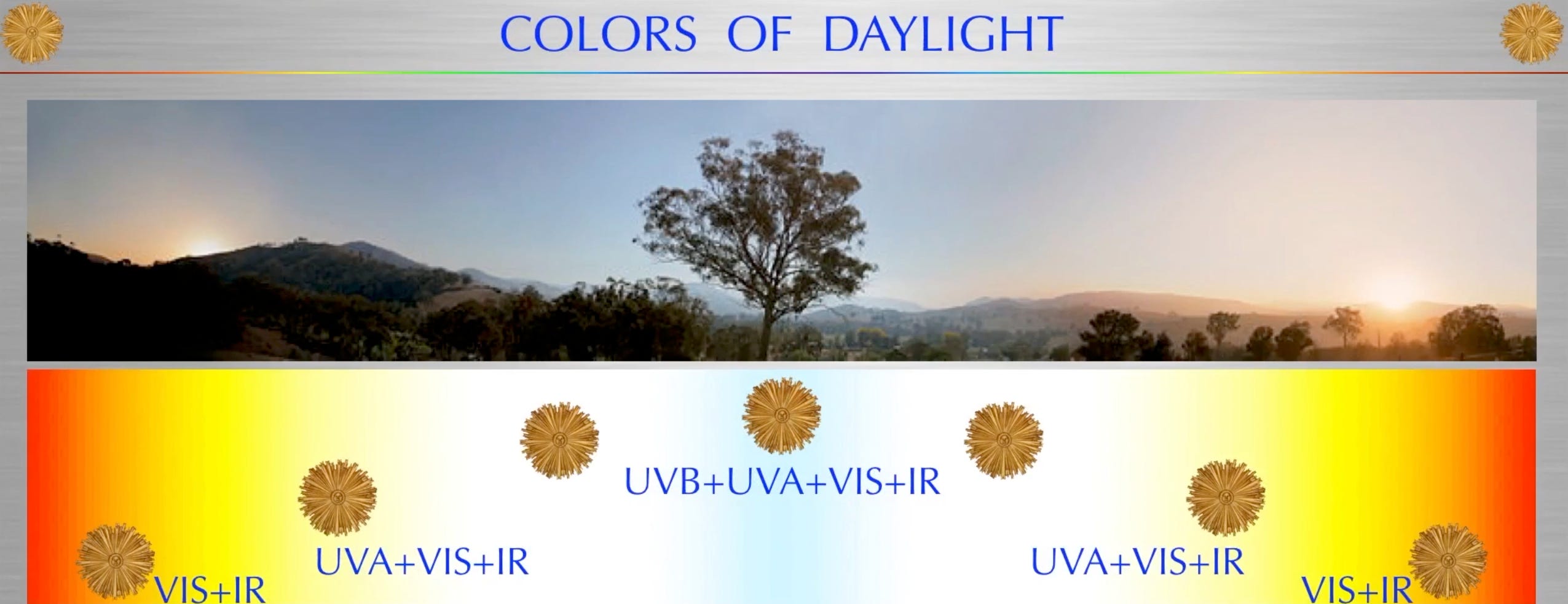
Infrared-A (IR-A) is the same wavelength as NIR (near infrared). NIR allows us to absorb subcellular melatonin, which fights inflammation, boosts mood, and wards off disease with immediate spikes of anti-inflammatory hormones. Here’s what the spectrum of light should look like for you during the day:
What does this have to do with our skin?
Sunlight is data. When our eyes download the signals of light from the Sun, we upload critical hormones like MSH, or melanocyte-stimulating hormone.2 The more red light we receive in the morning allows us to build our solar callus by reducing sunburn from UV-B.3 Infrared light can even provide up to a SPF 15 level of skin protection, if we receive this light before the UV of the afternoon.
Skin tolerance to UV radiation is also known as photoadaptation, and develops when we repeatedly expose ourselves to exposure to UV light, which in turn makes us less susceptible to a sunburn.
How do we get a healthy tan?
Don’t use tanning beds that only emit UV, like I used to do in my meathead Jersey shore days. You’re not only not getting red light, you’re irradiating yourself in a cage of dirty electricity. Here are some steps we can all take, especially those with a pale complexion:
1️⃣ Know when IR-A is present and when UV light is absent in your area.
2️⃣ Pre-load your skin with a ton of IR-A light.
3️⃣ Load your skin with a healthy dose of UV-A, followed by UV-B.
When we follow the Sun, we lead our bodies toward health.
How’s this relevant for all you pasty vikings out there sailing the stormy seas of blue light?
Let me fil-a-ggrin the blank for you
Northern Europeans and those with a Fitzpatrick skin type of 1-3 have less melanin on our epidermis (outer skin layer). Melanin absorbs UV radiation, however these populations lived in areas with low UV, causing melanin to locate itself in deeper structures of the brain and central nervous system.4
As melanin was lost on our skin surface, the protein filaggrin (FLG) came in to fill its place. For some, the FLG gene underwent a mutation that would allow those with paler skin to absorb more vitamin D as their sensitivity to UV light was increased.5
Red-haired people need red light
Filaggrin must be in skin to develop our solar callus, and is made by IR-A light. IR-A light has a longer wavelength, and penetrates more deeply into our skin. Its longer wavelength is the same reason you see more red in the sky at morning vs. blue, which has a shorter wavelength. This is why space telescopes like Hubble are engineered to detect in infrared, as it’s able to visualize further into objects, using the infrared light energy (invisible to the naked eye) emitted from stars:
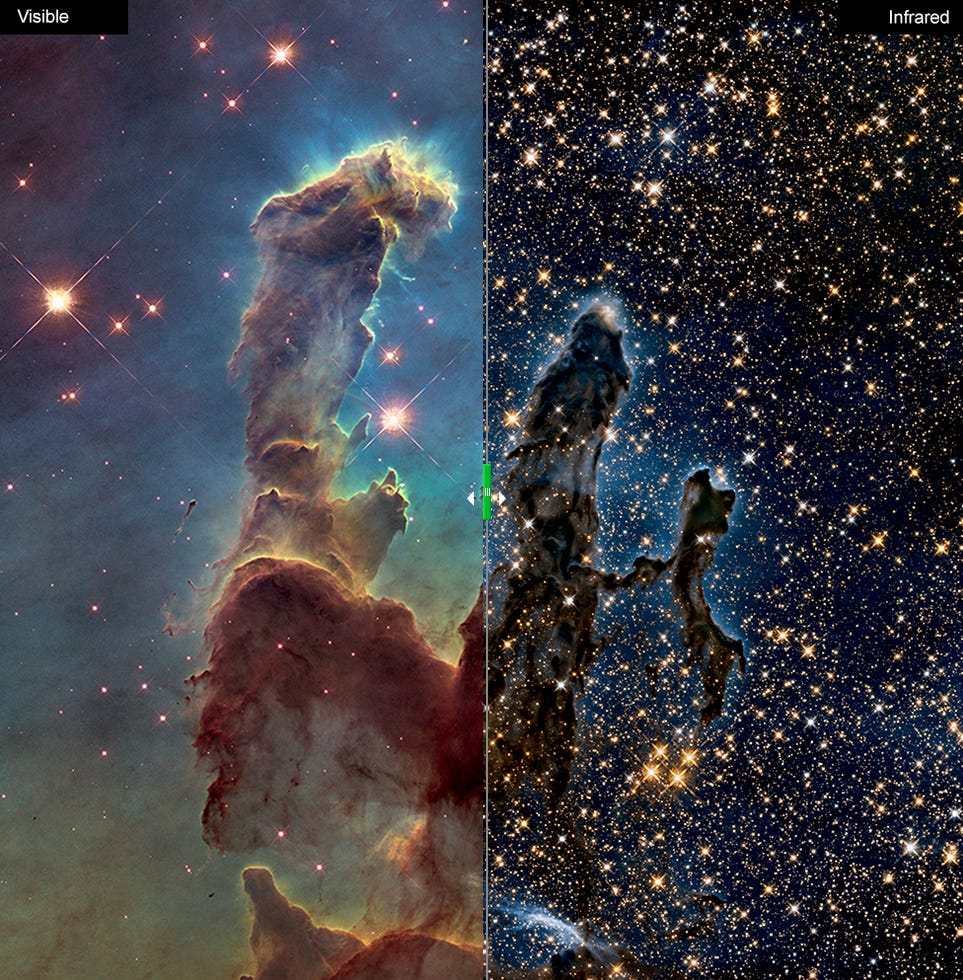
The longer wavelength of IR-A, also referred to as the optical tissue window, allows this light to repair cellular damage and regulate the energy centers of our cells, the mitochondria. Filaggrin is made by infrared light that stimulates cells called fibroblasts to make collagen for our skin.


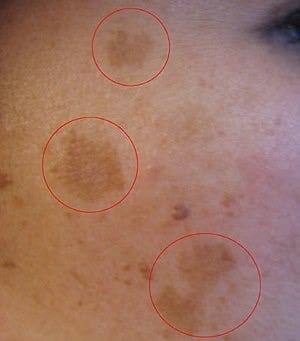
👉🏽 TIP: If you have brown spots (melasmas) on your face this could be a sign of excessive blue light with no IR-A and UV-A light, which stimulates melanocytes on the facial skin where there is very little fat present. This usually occurs on the skin above bony prominences. Thank you Dr. Jack Kruse for this heads up.
UV: all the blame, none of the credit
When we bathe in infrared light in the morning, we increase our tolerance for the amount of UV we can absorb.
Why is this important?
We use UV to make wonderful compounds like vitamin D, thyroid hormones, dopamine, melanin, melatonin, serotonin, and for all you pasty beserkers out shipwrecked on the coasts of Mexico - urocanic acid.
Urocanic acid creates a type of UV filter from histidine:
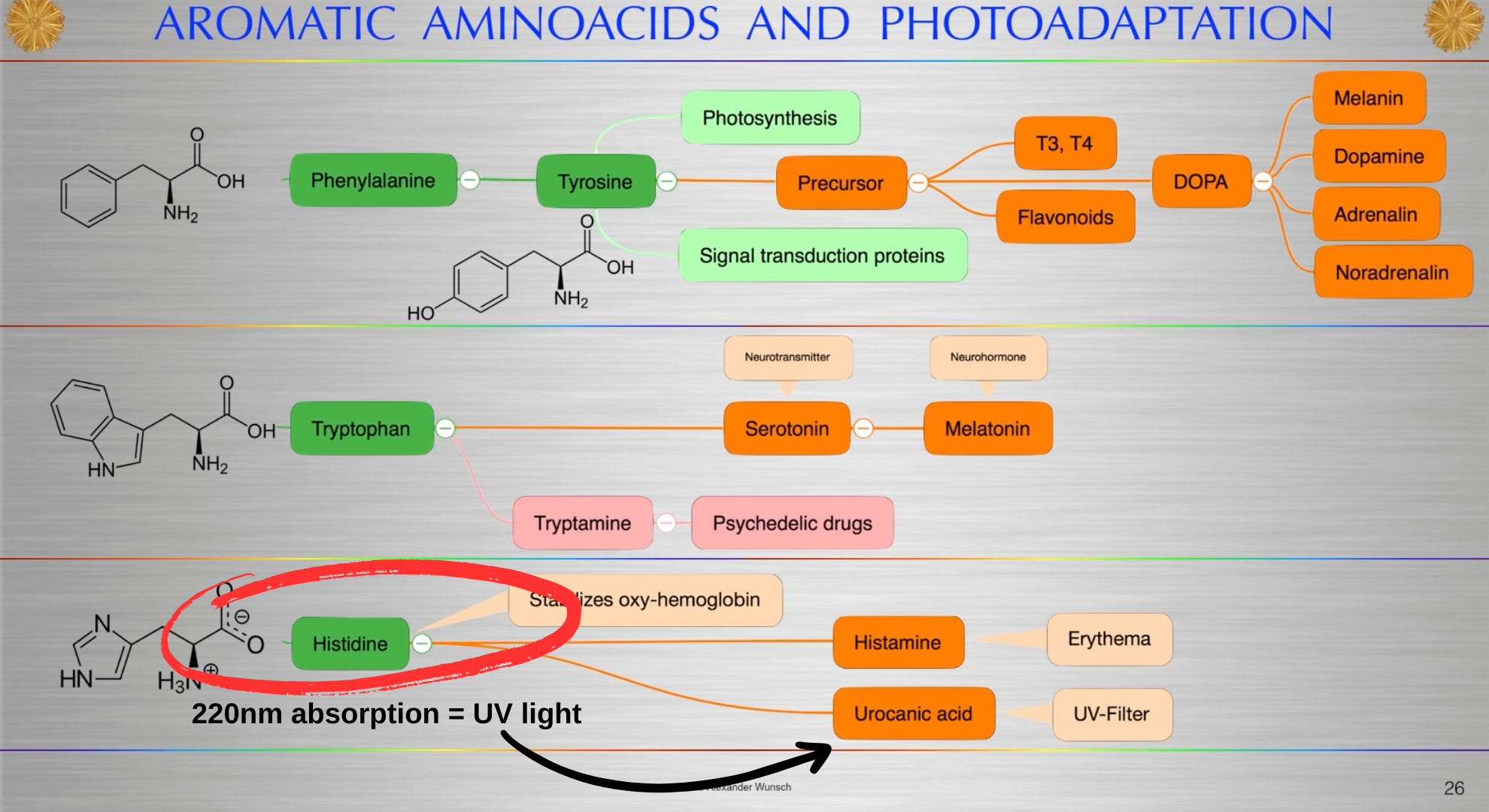
As histidine in our bodies absorbs Sunlight, our skin makes urocanic acid that is a UV filter that protects us from sun burn and skin damage.
How do we eat our sunscreen?
If you’re a red haired marauder, have invaded the resorts of Cancun, and about to order your next mead with pineapple, you may want to crunch down on some shrimp shells like a real man.
If you don’t already make lots of seafood broth with shellfish, now may be it may be a good time to start.
Astaxanthin is a type of carotenoid found in shellfish, and actually penetrates the blood brain barrier and the blood retinal barrier in our eyes to offer protection.
Shrimp broth is very easy to make, and a good reason not to throw your shells out.
Here’s our quick recipe:
✔️ 2 - 4 cups of shrimp shells skin, rinsed
✔️ 1 tablespoon sea salt, 1 tablespoon whole black peppercorn
✔️ Skin of an onion, or try leeks if you bloat with onions
✔️ 1 stalk celery
✔️ Bunch of cilantro or parsley, optional
✔️ Add purified water and boil 30 minutes
✔️ Close bedroom door to ward off smell (keeps spouse happy)


Because astaxanthin gets into the human brain and retina, it brings antioxidant and anti-inflammatory protection to our eyes, brain and central nervous system, and reduces our risk for cataracts, macular degeneration, blindness, dementia and Alzheimer's disease. Astaxanthin is soluble in lipids, so it incorporates into cell membranes where sunlight interacts with it to protect us.
This is known as carotenoid protection (CAR).
The Oxygen CAR
Carotenoid protection works by “quenching” singlet oxygen by converting it to triplet oxygen, the most stable form our bodies can use. As a result, CAR extinguishes the excitation reaction from light. This means we can use CAR to protect ourselves from EMFs like 5G and blue light.
Blue light destroys vitamin A (retinol) in the eye, and carotenoids like astaxanthin are pro-vitamin A chemicals. More importantly, the quenching process allows us to absorb more light, therefore building our viking callus.
Water as Nature’s Sunscreen and EMF blocker
The filaggrin protein I mentioned above is heavily phosphorylated. What does phosphorus have to do with water?
Japanese researchers have shown that phosphorus is a key element in splitting water into hydrogen and oxygen while liberating electrons in the process under natural solar conditions.6
The most abundant source of fuel for our bodies isn’t coffee (ok, I love it too) or ice cream (close second) but water. Water contains hydrogen. Hydrogen fuel cells burn clean, and hydrogen is used up very efficiently by our bodies in the same way. When we have enough filaggrin, our skin can then retain water, which can then also create a sort of buffer for EMF with structured H2O.
While structured water is another article to itself, for now let’s break the concept down simply with the concept of charge separation, which is often used in batteries ( + to - ). Phosphorus in the skin is an important source of charge separation for animal photosynthesis, allowing us to make hydrogen in the skin. Charge separation allows our bodies to metabolize free radicals and ions, along with creating what is known as the “exclusion zone” Gerald Pollack talks about in his seminal work, The Fourth Phase of Water.
In the end, common sense must rule the oceans of health. If you’re pale-skinned and your ancestors ate more fish and lived in low UV environments, then you may want to do the same.
Just make sure you stroke the red beard of the Sun first.

We are more powerful than we know,

If you found this episode valuable, would consider sharing it?
Check out The Power Couple Bookshop - dedicated to making us relearn from our ancestors!

Support us the old fashioned way!
Send us an email to info@thepowercouple.ca if you’d like to send us other forms of payment, including 🐌 mail!
Since Canada Post is currently on a strike, we may need the Pony express. 🐎
Chen, P., He, S., Wang, T. et al. Melanin-like nanofibers with highly ordered structures achieve ultrahigh specific electromagnetic interference shielding efficiency. Nat Commun 16, 7127 (2025). https://doi.org/10.1038/s41467-025-62367-9
Chakraborty AK, Funasaka Y, Slominski A, Bolognia J, Sodi S, Ichihashi M, Pawelek JM. UV light and MSH receptors. Ann N Y Acad Sci. 1999 Oct 20;885:100-16. doi: 10.1111/j.1749-6632.1999.tb08668.x. PMID: 10816644.
Barolet D, Boucher A. LED photoprevention: reduced MED response following multiple LED exposures. Lasers Surg Med. 2008 Feb;40(2):106-12. doi: 10.1002/lsm.206 15. PMID: 18306161.
https://www.patreon.com/posts/how-do-you-build-13077291?utm_medium=clipboard_copy&utm_source=copyLink&utm_campaign=postshare_fan&utm_content=join_link
DOI:https://doi.org/10.1016/j.jaci.2012.06.046
https://www.sciencedaily.com/releases/2020/06/200603104547.htm
For those vegetarians who don't want to eat shellfish, another source for carotenoids is red palm oil and annatto seeds which are traditionally made into a spice paste called achiote. Red palm fruit and annatto seeds are sources of tocotrienols, potent anti-oxidants. Annatto seeds also do not have any tocopherols, which interfere with the absorption of tocotrienols. There are many herbs that provide anti-oxidant activity. Two that I have found to be useful are Cat's Claw, or Uncaria Tomentosa, Chrysanthemum Morifolium and Damiana, which balances hormones in both men and woman, https://consensus.app/search/damiana-effects-on-metabolism/j5SFZz1rTKC59mUjt5qw6A/
I really like this article! Yes and I’ve read Gerald Pollack’s Fourth Phase of Water. No wonder I have Pterigiums and brown spots, too much sailing in the afternoons. I’ll think of you in the dawns. And I’ll dibs the dawn watches from now on
Thank you from the redheads in our family