

How to detox nanotech with sunlight
Melanin: A Sink for Heavy Metals

Here’s what we will learn in this article:
1. Living on spaceship Earth
2. Melanin: the first and final frontier
3. How melanin is our body’s nanotech
4. How does melanin limit damage from EMF?
5. Our magnetic immune system
6. Could melanin make us more resilient to nanotech?
7. How melanin’s heat destroys and gives life
8. How we can absorb melanin
9. How Big Tech will manipulate melanin
“The world wants to touch your skin
but I want to touch your heart.”
~ Avijeet Das
Would you be able to survive in outer space without a space suit?
What if we were to lose the protection of Earth’s force field, which normally keeps out biologically-damaging cosmic rays?
The European Space Agency estimates that our magnetosphere, our planetary shield, is weakening about five percent per decade.1 Let’s assume this is true.
How would we construct a suit of armor to shield ourselves from these alien forms of radiation?
Today humanity fights in a quiet war, waged on the fields of the mind, where our enemies seek to plunder our soul. We are assaulted on all sides from the invisible electromagnetic pollution of a Mordor electronic.
We’re sprayed like bugs with metallic pesticides falling from the sky.
We’re injected, neglected, and disrespected because we’ve disconnected from our body’s inner wisdom.
We find ourselves in a no man’s land - betwixt a trench where our future lay frozen in control, and a trench of unknown destiny where we may yet crawl, and evolve into a humbler version of ourselves.
Humanity has been laid bare on the technocratic butcher block.
Since we’ve been dressed down, we might as well expose our true selves.
Let’s show the sun, and the sons of Mordor, what we’re made of, shall we?
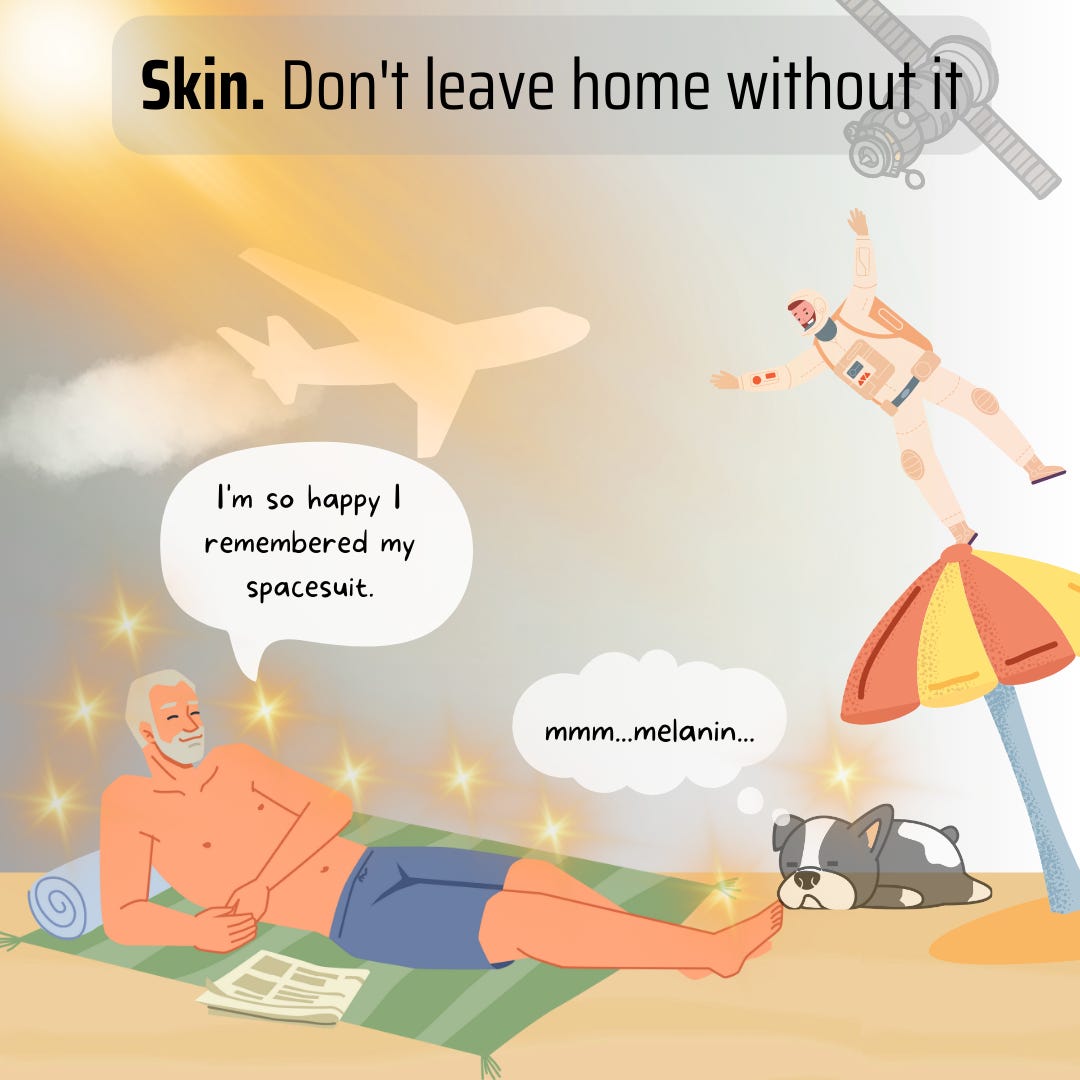
Skin: our ancestors’ sunscreen
We were all born naked under the same sun. Some of our ancestors had very little clothing, while some donned hats. Indigenous people didn’t wear sunscreen, and they didn’t have sunglasses to “protect” themselves from nature. They were nature.
How did we survive and reproduce all this time without spraying ourselves down with sun-screening chemicals?
If levels of vitamin D are chronically low, why do so many suffer from skin cancer?
Why are skin cancers more prevalent in higher latitudes in places like Sweden, where UV is lower?
In this article, we’ll explore how skin is not only our ultimate SPF, but also how we transform UV into the energy we need to eternally fight in cosmic combat.
We’re all astronauts now.
For thousands of years, we lived within Earth’s protective veil and electrical envelope. Earth’s envelope kept our brains beating to a steady rhythmic frequency of 8-30 Hz (cycles per second).
Today we don’t need to win a Space Race, our racing thoughts can’t keep up anymore with life on Earth. Wi-Fi synchronizes us to an alien clock, as its frequencies bombard our minds at 2.5 billion cycles per second.
Space is the ulitmate boiling soup of non-native electromagnetic radiation- similar to those we have here on Earth from Wi-Fi and 5G.
How can we begin to tailor our own spacesuit in order to live on Earth?
Melanin - our first and final frontier
Melanin is the shield and solar panel of our skin. Melanin transforms 99.9 % of absorbed sunlight into heat, and this greatly reduces the skin cancer risk.2 It also enhances the amount of infrared we can receive from the Sun. Infrared light is present in 40% of the solar spectrum all year, and drives the engine of our metabolism.3
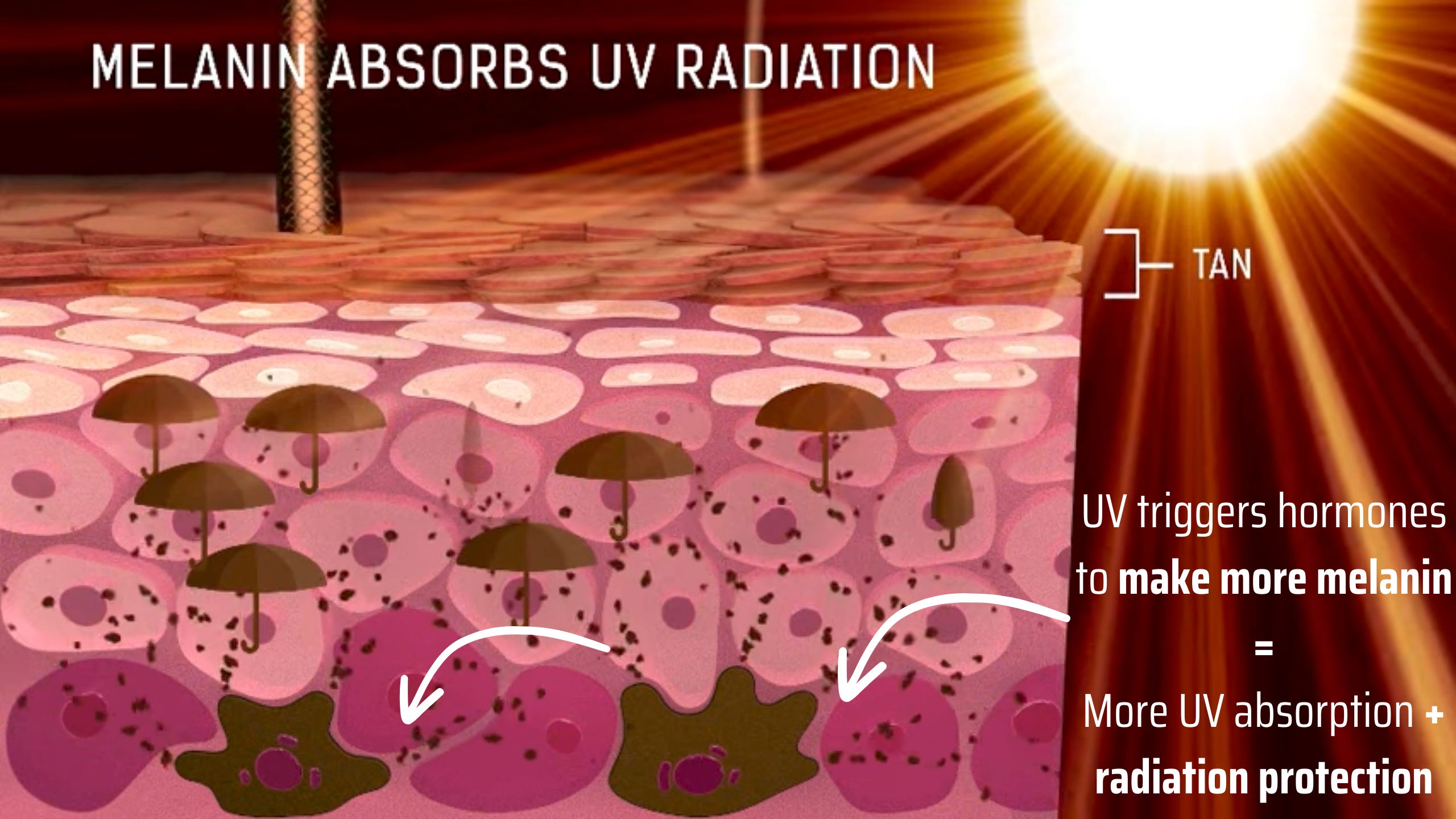
Melanin is so efficient in absorbing radiation that samples are headed to the International Space Station to test their shielding ability, to determine whether it’s more effective than lead at protecting satellites and electronics:4
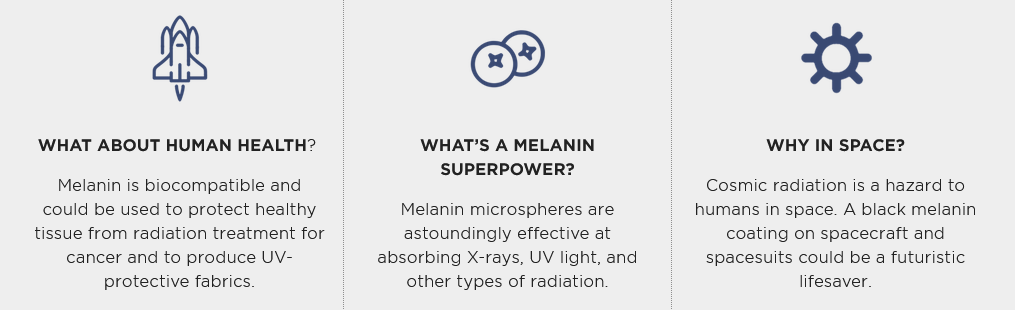
The mainstream believes melanin’s true purpose is to protect us from ‘damaging’ UV (ultraviolet) rays. They’ll tell you it’s a pigment that gives our eyes and skin their color. Why are these only only half-truths, which completely lie about melanin’s superpower?
UV light builds the battery of our body. Each day our skin and eyes are designed to harvest this light, helping our NAD+ enzyme gather electrons to combat free radicals. UV also allows us to create and absorb certain amino acids such as tyrosine, which ultimately get converted into critical hormones like dopamine and…melanin!
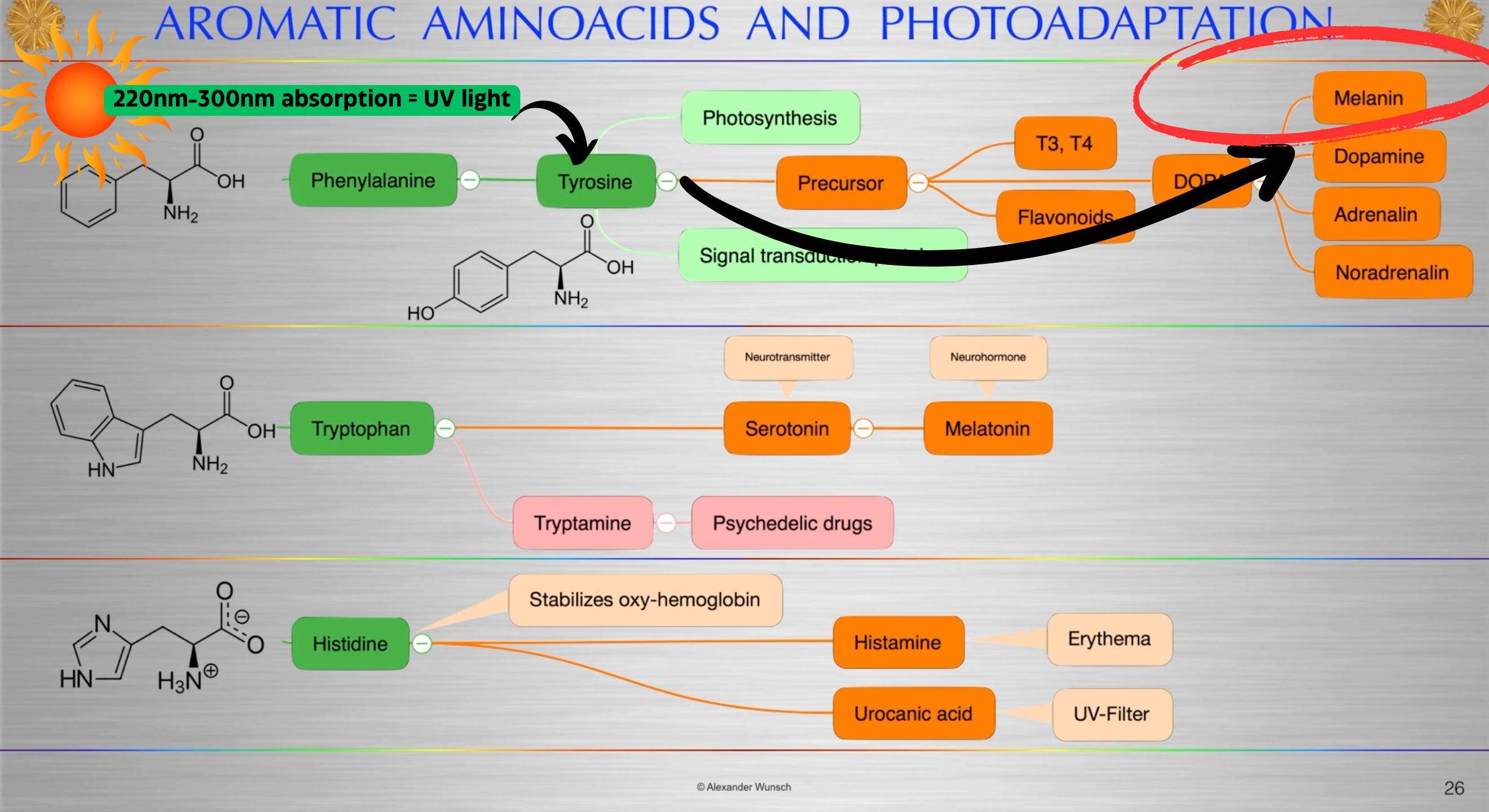
“For this mechanism to tune properly, you first need AM balanced light in the visible spectrum that has no UV light present.”
✅ Translation: Get your bare a$$ out there for the sunrise.
Melanin: Our Body’s Nanotech
Melanin is on average about 800nm thick - close to the size of bacteria, or a circuit on a computer chip. Our melanin uses the light around us to not only give us a gorgeous tan, but also works as a surge protector and battery bank.
EMFs harm us by disrupting the way our bodies’ voltage-gated calcium channels work. 5 Our hearts have some of the largest stores of calcium. What do doctors prescribe for heart disease? Calcium channel blockers.
What if we just need block EMF, rather than block calcium? Before 1889 and the invention of electricity and the radio, heart disease was the 25th cause of death. Today it’s a top killer:

Melanin to the rescue! Our beloved skin’s pigment is an intracellular buffering system for calcium and an ion-exchanger.
✅ Translation: melanin helps us use calcium more efficiently.
Our battery bank:
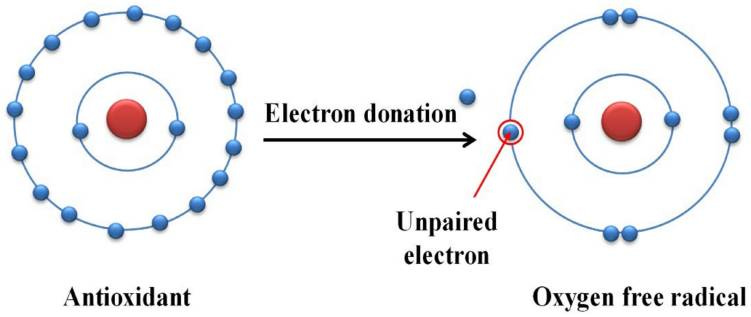
Oxidative stress occurs when we don’t have enough electrons to donate to free radicals. Melanin is our electron bank and donor. As our bodies encounter a “power surge” from metals around us in the atmosphere, along with highly reactive metals that are created from EMFs, melanin is able to then bind itself to these metals, making them less harmful.
In this high frequency world of EMFs and toxic soup of nanoparticles, melanin is a form of divine health insurance.
Here’s an example of how melanin is works as our skin’s “computer chip”:
How does melanin limit damage from EMF?
One way in which electromagnetic radiation from devices such as cell phones, smart meters, and solar inverters harms us isby disrupting how we use oxygen.
Iron (Fe) is what makes our blood red, and is found in hemoglobin, the protein in our red blood cells that carries oxygen to our body's organs and tissues. EMF degrades our body’s ability regulate iron levels.6
Cells that have a high levels of extra iron are more vulnerable to EMF. Cancer cells and cells undergoing abnormal multiplication have higher concentrations of free iron because they also uptake more iron, as a result storing iron less efficiently. Melanin acts as a “heavy metal sink”, or reservoir, that efficiently stores iron for us.
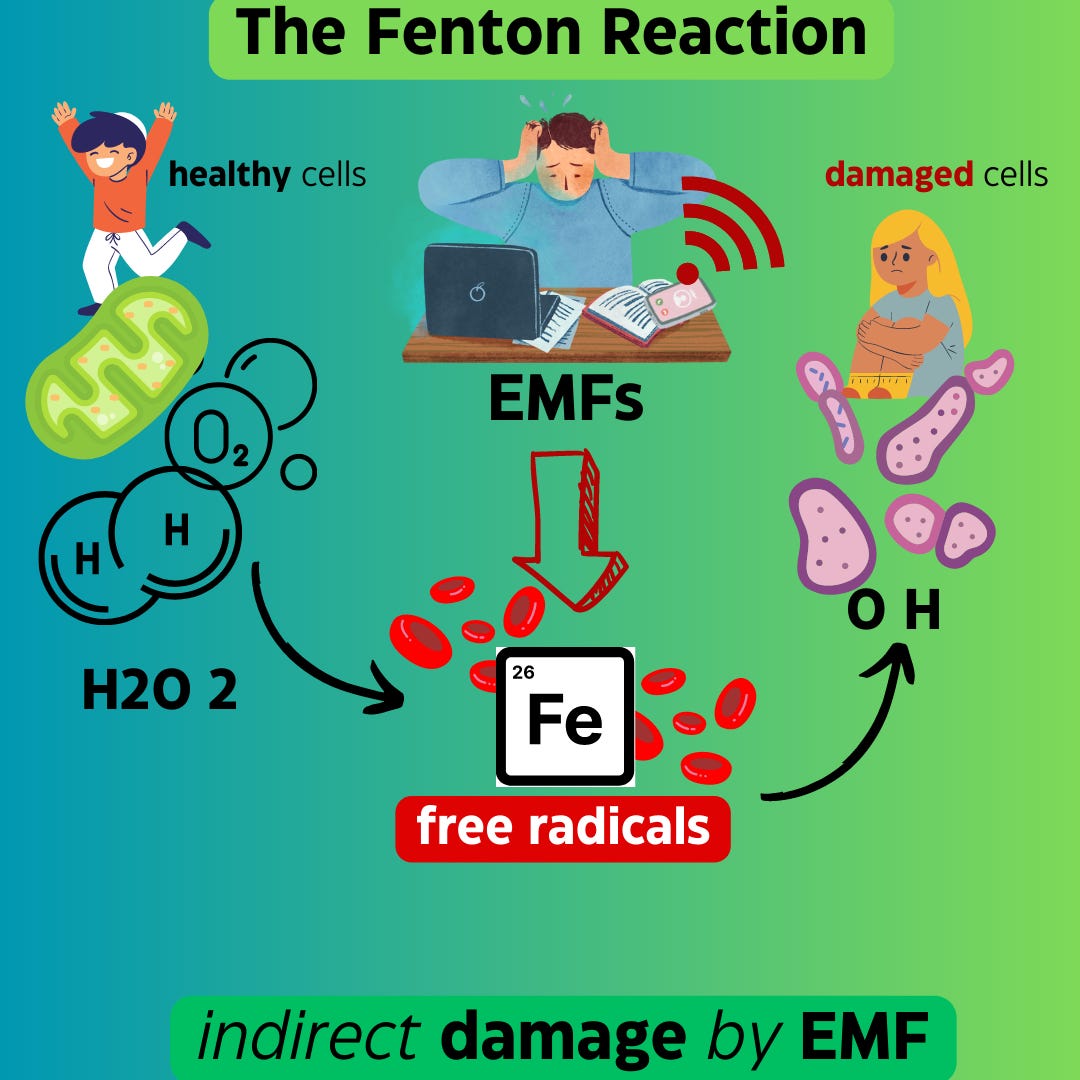
Electromagnetic fields also produce a Fenton reaction, as radiation acts upon iron, creating stress on our cells in the form of free radicals.
Our magnetic immune system
Many of us know that our T cells help us fight disease. But most don’t know that these types of white blood cells are inherently magnetic because of the amount of ferritin (iron) they contain.
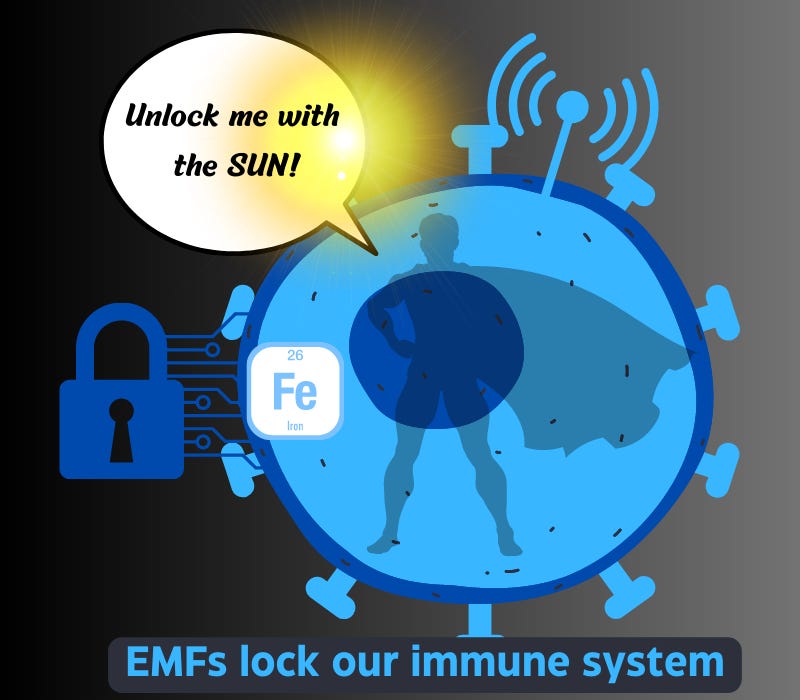
T cells can become "magnetically frozen" to pathogenic free radicals and oxidized iron when they encounter EMF. Under normal circumstances however, T cells will lock onto the target pathogen and render it neutral.7
What if we have too much iron in our blood from ferritin nanoparticles that are used in vaccines, along with high amounts of electrosmog in our homes?8 Could these T cells become chronically frozen and rendered ineffective?
Good news: UV solar exposure unlocks the T cells’ magnetic grip and allows our cells to limit the cytotoxic damage to our organs.9
Could melanin make us more resilient to nanotech injections?
It’s no secret that nanoparticles and heavy metals have been discovered in the experimental injections for SARS-CoV-2.10 11 12 13 .
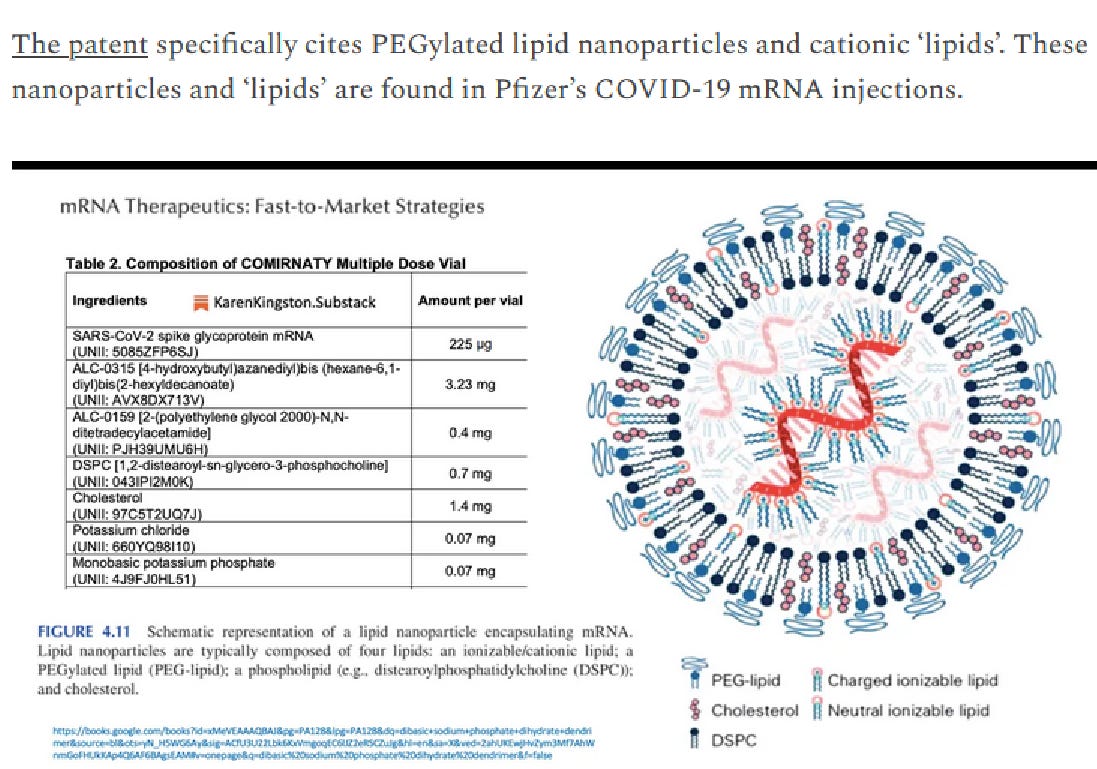
The lipid nanoparticle (LNPs) above is able to access our cells and harm us since it is a positively-charged ion, otherwise known as a cation. Cations will migrate to cells that have a negative charge, robbing them of other free electrons. An excess in this positive charge can lead to free radicals and inflammation.
Remember the example of how melanin serves as a battery bank? This happens as melanin can donate electrons to cations. Heavy metal cations, such as copper, lead, lanthanum, iron, and even uranium bind to melanin. 14
Melanin is able to accumulate these metal cations and then, under certain conditions, release them.
“Melanin enables, storage, release and exchange – and the ability of melanin to strongly bind and sequester reactive metals thereby mitigates their possible role in inducing oxidative stress.” (Hong, L. 2007)
Melanin’s Heat: Destroyer and Creator
Much of the research into nanotechnology has been purported to be for our benefit. Big Medicine claims they are trying to find a way to kill cancer cells using the heat that is generated from EMFs that target injected nanoparticles.
For instance, when an EMF is directed toward a gold nanoparticle in a cencer cell, it destroys it. However EMFs also destroy normal cells that contain these nanoparticles.
We don’t need this “cure.” Nature already gave our bodies this technology.
Melanin not only absorbs UV radiation, it transforms this energy into heat our bodies can use.
“Melanin is able to transform 99.9 percent of absorbed sunlight into heat, and this greatly reduces the skin cancer risk. “
~ Stephanie Seneff , Ph.D.
Skin cancer cells actually produce a lot of melanin as part of the immune response. This makes sense, as cancer cells make excess iron, and melanin is able to absorb and distribute iron so it does not accumulate and poison surrounding cells.
How we can absorb melanin?
Remember: melanin comes from tyrosine, and tyrosine is absorbed when we get out into UV light. Look up the UV index in your area (locator), and when it hits an index reading of 1, get out there.* Ideally you already want to be outside, as the blue light and infrared rays prime our skin for the more intense UV. I try to get out at least 30 minutes (bare minimum) between the hours of 8-10am.
*This is not intended as medical advice, and I am not a licensed medical professional.
Another reason to eat pasta…like I need another excuse.
Melanin is found everywhere in our environment. Mushrooms, black sesame seeds, black pumpkin seeds, and many other dark foods contain this miracle molecule. Black rabbit hair is also found to contain a lot of melanin. Don’t go wearing rabbit-hair Speedos on the beach…that would be too sexy.
The ink from the cuttlefish (actually a type of octopus) is also one of the richest sources. This ink is abundant in the “feel-good” hormone dopamine as well, which is a precursor to melanin.
Squid-ink pasta anyone?


How Big Tech will use melanin
What confirms melanin’s incredible implications for me is the fact that it is currently being heavily researched by the military, space agencies, and the tech sector.
Here are some fields where melanin’s use is being investigated:
Bioelectronics (wearables and implants)
Protonics (interface directly with living tissue and neurons)
Edible devices (like crunchy computer ‘chips?’)
Transient electronics (designed to physically disintegrate or degrade after a certain period or under specific environmental triggers)
We can guess how technocrats will use melanin: to cover up a rotten underbelly of control with a shiny coat of terror, dressed up in a black suit of fake liberty.
Let’s get our skin in the game. Let us implant freedom.
Your support is more powerful than you know.

If you’ve benefited from our information or services…
👉 Would you leave us a warm Google Review?
We’re launching our third semester of EMF 101 this fall.
Join our waitlist, and become eligible for a 10% discount when we launch!
Additional Resources:
Another EMF-protector - the chaparral plant:

My Interview with Stew Peters on 5G
Listen to our podcast - The Power Couple
New episodes each Thursday!
https://www.livescience.com/46694-magnetic-field-weakens.html
https://www.westonaprice.org/health-topics/sunlight-and-vitamin-d-theyre-not-the-same-thing/#gsc.tab=0
https://magazine.jhsph.edu/2019/melanin-space
https://www.ncbi.nlm.nih.gov/pmc/articles/PMC3662108/
https://jackkruse.com/energy-epigenetics-8-autism/
https://www.nature.com/articles/s41541-021-00414-4
https://www.nature.com/articles/s41541-021-00414-4
Excellent article.
Does melanin also bind to aluminum, or will aluminum only bind to orthosilic acid?